




















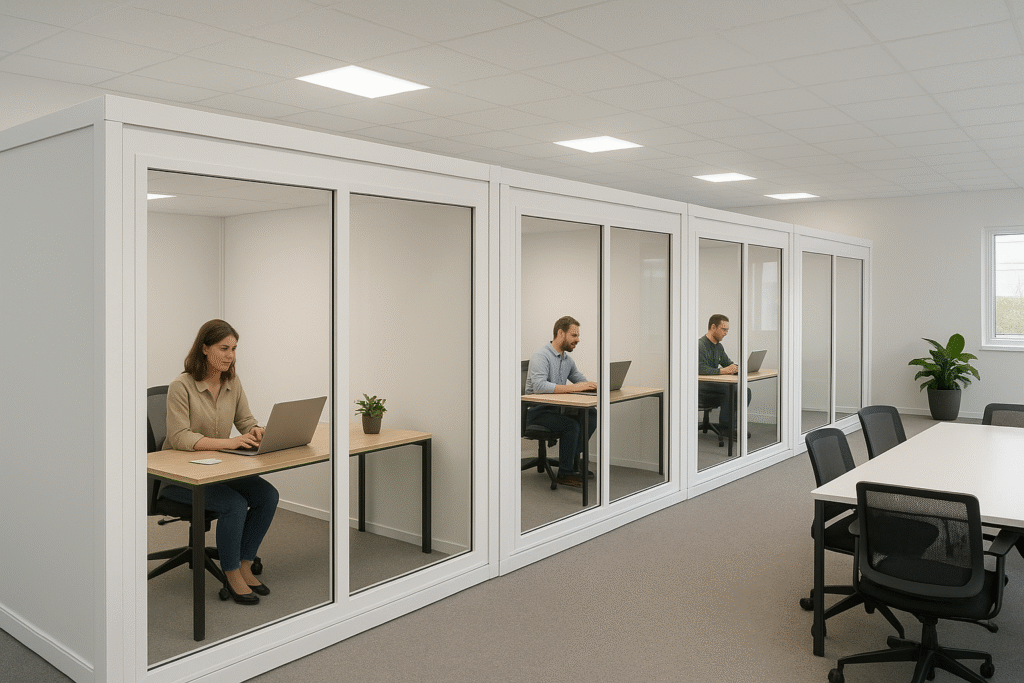
ChatGPT:
Cost-Effective Workspaces
One of the main reasons startups choose prefabricated offices is affordability. Traditional office rentals or construction can be prohibitively expensive, especially in major cities. Prefabricated buildings reduce both initial investment and ongoing maintenance costs. Since they are manufactured in controlled environments, the risk of construction delays or hidden expenses is also minimized.
Speed of Deployment
In the fast-moving world of startups, time is critical. Prefabricated offices can be produced and assembled in just a few weeks, allowing new businesses to begin operations quickly. Unlike traditional construction, which can take months or even years, modular solutions provide a fully functional workspace almost immediately.
Scalability and Flexibility
Startups often experience rapid changes in team size and operational needs. Prefabricated offices are highly adaptable: additional units can be added as the company grows, or spaces can be reconfigured to match evolving requirements. This scalability makes them perfect for businesses that need room to expand without committing to long-term leases or costly renovations.
Professional Image for Clients and Teams
An office is more than just a place to work—it’s also a reflection of a brand’s identity. Prefabricated offices can be designed with modern aesthetics, professional layouts, and integrated facilities, creating a space that enhances credibility with clients and motivates employees. From sleek meeting rooms to collaborative open areas, these structures support productivity while leaving a positive impression.
Sustainability and Innovation
Today’s startups are increasingly conscious of their environmental impact. Prefabricated offices use energy-efficient materials, minimize construction waste, and can be equipped with sustainable features such as solar panels and smart systems. By choosing modular offices, startups showcase their commitment to innovation and responsible business practices.
Long-Term Value
While prefabricated offices are affordable upfront, they also offer long-term value. Units can be relocated, reused, or upgraded, making them a lasting investment rather than a temporary solution. This versatility ensures that even if a startup changes location or expands into new markets, the office infrastructure can move with them.
Conclusion
For startups seeking the perfect balance between affordability, speed, and flexibility, prefabricated offices are the ideal solution. They provide scalable, professional, and sustainable workspaces that evolve with a company’s growth. As entrepreneurship continues to thrive globally, modular office solutions are becoming the smart choice for building a foundation of success.


