




















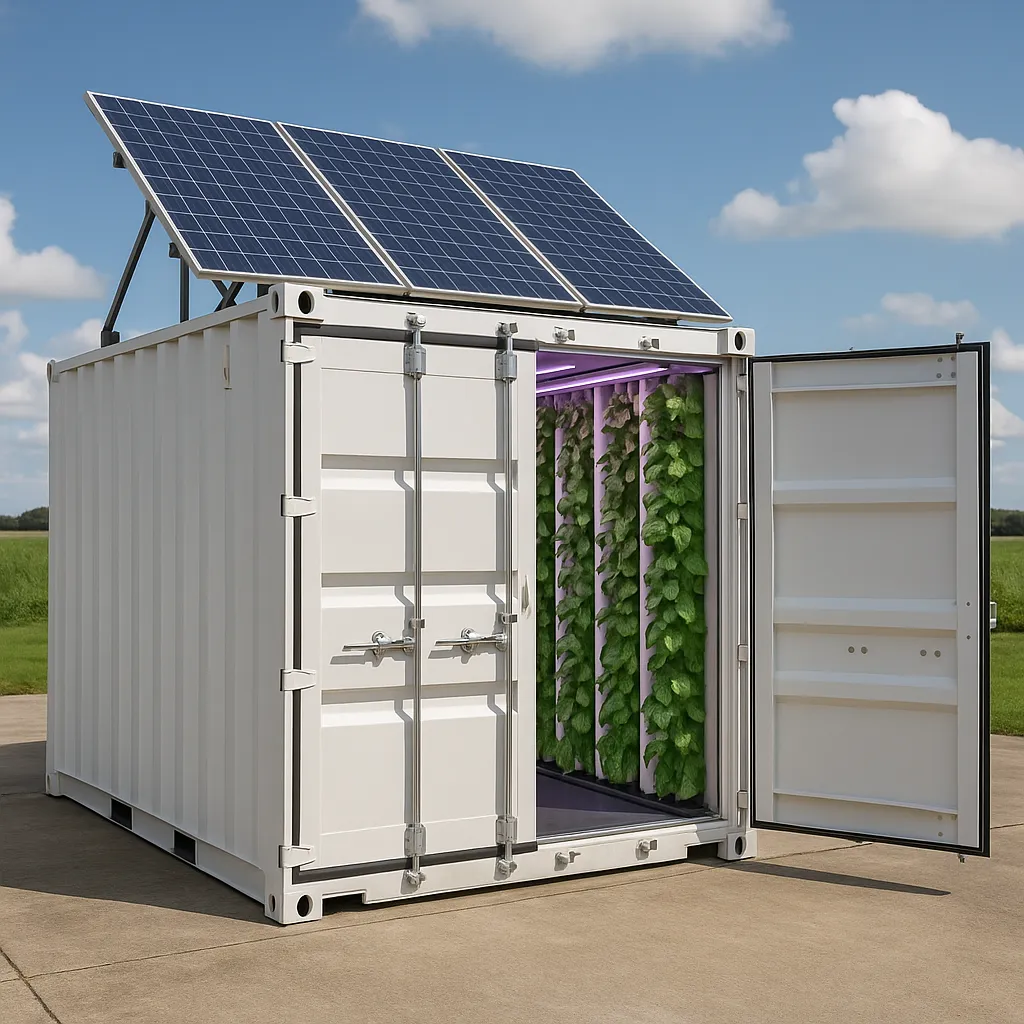
Hydroponic Vertical Farming Containers for All-Season Harvests
Compact farms built inside insulated containers deliver clean crops, predictable yields and year round supply without soil—ideal for urban, peri urban and remote sites.
Rapid deployment
Units arrive pre engineered. Installation focuses on utilities, commissioning and crop start up.
Water efficient
Recirculating hydroponics minimises losses while delivering precise nutrition to plant roots.
Clean production
Closed environment with filtration and positive pressure helps reduce pests and contaminants.
Scalable
Start with one container and add more as demand grows. Centralise nurseries and labour.
From Food Miles to Fresh Miles
Urban consumers want fresher produce with fewer transport kilometres. Traditional supply chains struggle to deliver consistent quality year round. Soilless vertical farming containers shorten the distance between harvest and plate by bringing the farm to the market. Climate control and LED lighting maintain growth recipes across seasons, supporting steady output when outdoor fields are idle.
How a Container Farm Works
- Climate shell: insulated steel container with food grade interior, HVAC and dehumidification.
- Vertical racks: multi tier shelves maximise canopy per square metre.
- Soilless system: hydroponic (NFT, DWC, drip) or aeroponic delivery recirculates nutrient solution.
- LED lighting: spectra tuned for photosynthesis with dimming and photoperiod control.
- Automation: sensors log temperature, humidity, EC and pH; dosing and irrigation respond accordingly.
- Workflow: nursery for seedlings, grow area for finishing, sanitation zone for harvest and packing.
Crops That Thrive in Soilless Containers
Butterhead lettuce
Romaine
Basil
Coriander
Mint
Microgreens
Arugula
Kale
Strawberry
*Vine and fruiting crops are feasible with trellising and climate stability but often require more power and labour per kilogram.
What Shapes Cost and Performance
- Lighting plan: LED efficacy, density and hours drive energy bills and growth rates.
- HVAC sizing: Cooling loads must offset lamp heat and transpiration to hold setpoints.
- System type: NFT or DWC have different capex and maintenance profiles; aeroponics offers fast growth but needs reliable misting.
- Labour model: Seeding, transplanting and harvest routines determine unit economics.
- Local electricity price: Tariffs impact margins; night rates and solar can help.
- Sales channel: Direct to retail or food service usually improves returns compared to wholesale.
Daily Operations in a Container Farm
Successful growers run their containers like mini factories. Standard operating procedures cover sanitation, seeding calendars, nutrient recipes and harvest QC. Data from sensors supports continuous improvement. Many teams stagger crop cycles to deliver weekly harvests for fixed customers.
Morning
Check setpoints, inspect leaves, calibrate probes if scheduled.
Midday
Transplant seedlings, adjust lighting scenes, mix fresh nutrient solution as required.
Afternoon
Harvest and pack, sanitise tools, log yields and waste for traceability.
Strengths and Trade Offs
Strengths
- Year round output independent of weather.
- Consistent quality and food safety control.
- Minimal land footprint; install on parking lots or rooftops.
- Scalable network of units near demand.
Trade offs
- Energy intensive compared to greenhouses.
- Crop mix biased to high value greens and herbs.
- Requires disciplined hygiene and data logging.
Getting Started Checklist
- Identify anchor customers willing to sign weekly purchase agreements.
- Confirm three phase power, water supply and drainage at the site.
- Choose system type based on crops, labour and budget.
- Model energy use and explore solar or off-peak tariffs.
- Plan workflow: nursery, grow racks, harvest zone and cold storage.
- Create hygiene SOPs and staff training before first planting.
FAQ
What is a soilless vertical farming container
An insulated container fitted with racks, LEDs and a hydroponic system that grows crops in recirculating nutrient solution without soil.
Which crops are most reliable
Leafy greens, herbs and microgreens offer quick cycles and stable demand. Strawberries and vine crops are possible with suitable setups.
How much water is saved
Because nutrient solution is recaptured and filtered, water use is significantly lower than most open field methods.
Is it profitable
It can be where premium markets exist and energy is managed well. Success depends on crop choice, electricity price and labour efficiency.
Can it run in harsh climates
Yes, provided HVAC and insulation are sized correctly for seasonal extremes.
Conclusion
Soilless vertical farming containers turn compact spaces into reliable food production units. For cities seeking fresher produce, remote camps needing consistent supply or entrepreneurs building local brands, container farms offer a practical bridge between demand and dependable harvests. As with any business, clear scopes, disciplined operations and verified compliance are key to long term results.


