




















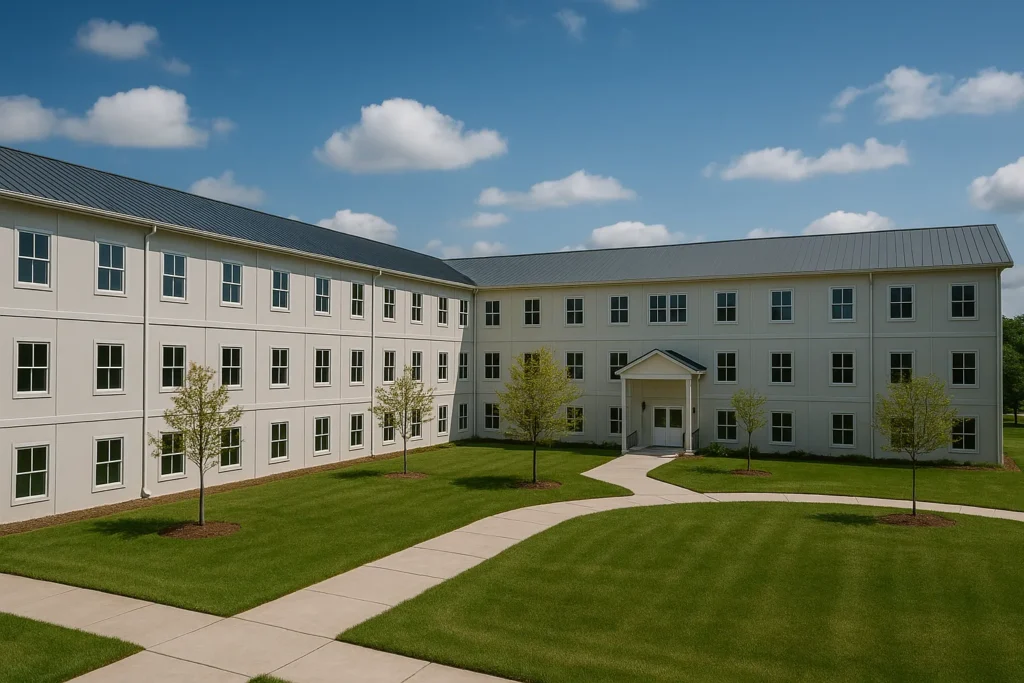
What They Are
Multi-purpose prefab buildings are modular halls produced off-site as volumetric units or panelised systems, then assembled on location. A single project may include a main clear-span hall, ancillary rooms, storage, sanitary cores and plant areas. Because much of the fabrication occurs in a controlled environment, programmes move from design to opening more quickly than conventional methods.
- Structures: light steel or hybrid frames sized for wide, column-free spans.
- Envelopes: insulated panels or façades targeting thermal comfort and durability.
- Interiors: demountable partitions, acoustic treatments and resilient finishes.
- Services: efficient HVAC, lighting scenes and AV infrastructure for mixed uses.
Why They Matter in 2025
Efficient use of space
One hall can host classes in the morning, sports in the afternoon and community events at night, extracting more value from each square metre.
Faster delivery
Factory-led production compresses critical path activities so communities can benefit sooner.
Cost control
Standardised modules and repeatable details help stabilise budgets compared with bespoke, multi-building sites.
Scalability
Additional bays or ancillary rooms can be added as demand grows, avoiding overbuilding at the outset.
Accessibility
Universal design features ensure inclusive access for events, learning and recreation.
Common Applications
- Education and training: lecture spaces, exam halls, labs and clubs.
- Sports and recreation: gyms, courts and fitness studios with appropriate flooring.
- Community and culture: exhibitions, concerts, ceremonies and meetings.
- Emergency response: temporary shelters, supply hubs and triage areas.
- Hybrid programmes: mixed learning and performance spaces with quick reconfiguration.
Key Design Features
- Large open spans: column-free areas for sport or events, with rigging points where needed.
- Flexible partitions: sliding or demountable walls to create classrooms or breakout spaces.
- Acoustic performance: wall and ceiling treatments tailored for speech and music.
- Lighting scenes: presets for teaching, performance and competition use.
- Ventilation and comfort: efficient HVAC with demand control and heat recovery.
- Storage integration: concealed stores for equipment, chairs and AV.
- Accessibility: level entries, accessible WCs and clear circulation.
Advantages Over Traditional Halls
- Time: delivery in weeks rather than years for comparable scopes.
- Budget predictability: clear scopes and factory QA reduce surprises.
- Adaptability: reconfigure interiors as programmes change.
- Relocatability: some solutions can be dismantled and moved.
- Lower disruption: shorter on-site phases reduce noise and traffic.
Cost Considerations
Total cost varies with scope and location. Main drivers include:
- Span and height: wider, taller halls require more structure and plant.
- Specification: sports floors, acoustic panels, stage lighting and AV.
- Compliance: fire safety, accessibility, thermal and, where applicable, seismic requirements.
- Usage intensity: heavy daily use justifies more durable finishes.
- Logistics: distance from factory, crane access and delivery sequencing.
Sustainability Benefits
- Material efficiency: factory precision reduces waste.
- Energy performance: insulated envelopes and airtightness lower operational loads.
- Renewables ready: roof areas suited to solar PV; efficient heat pumps and controls.
- Lifecycle thinking: design for disassembly, reuse and recycling where feasible.
Use Cases
- School expansion: a hall serving exams in term time and community events during holidays.
- Community hub: exhibitions, youth programmes and local markets under one roof.
- Sports club centre: modular training spaces with dedicated storage and changing.
- Emergency deployment: rapid shelters or aid distribution sites after disasters.
Challenges and Solutions
- Perception of temporariness: communicate design life, warranties and maintenance plans.
- Urban logistics: plan deliveries, cranes and neighbourhood notifications.
- Customization limits: reserve bespoke features for high-impact areas; standardise elsewhere.
- Maintenance: schedule checks for roof drainage, sealants, HVAC filters and fixings.


