

















The Future of Spanish Living: Why Prefabricated Houses in Spain Are the Smart Choice (Detailed Guide)
Prefabricated houses in Spain represent a revolution against the complexity, high cost, and lengthy timeline of traditional construction methods. They aren’t just a fleeting trend; they are a smart solution addressing the country’s rising housing demand, sustainability goals, and modern expectations. From the sun-drenched Spanish coastlines to the rustic inland landscapes, prefab homes deliver speed, quality, and flexibility, opening the door to a new generation of homeownership. This includes innovative solutions like container homes (casa contenedor) and modular structures ideal for remote locations or specific industrial needs, such as a mining camp (campamento minero).
This comprehensive guide will delve into the full spectrum of benefits, navigate the essential legal processes, and explain why these structures, including prefabricated container houses (casa prefabricada contenedor), constitute a wise long-term investment in Spain.
I. Speed, Efficiency, and Return on Investment: Valuing Your Time and Money
Building a home in Spain is often notorious for bureaucratic hurdles and on-site delays. Prefabricated houses fundamentally solve this challenge, offering particular advantages for specialized projects.
A. Rapid Installation through Dramatic Time Reduction
While constructing a conventional home can easily take over a year, prefabricated houses in Spain cut this time down to a matter of weeks, or a few months at most. This rapid deployment is especially beneficial for large-scale projects like a campamento minero, where temporary or semi-permanent housing needs to be established quickly and efficiently.
- Simultaneous Production: Modules are manufactured in the factory while foundation and infrastructure work happens concurrently on the land. This efficiency halves the project timeline.
- Precision Assembly: Because the modules are built with high precision, the on-site assembly is quick and hassle-free. This provides a massive convenience factor, especially in areas with difficult logistics like the Balearic or Canary Islands, or remote industrial sites. The ease of assembling a casa contenedor on site highlights this efficiency.
B. Cost Transparency and Predictability
One of the biggest struggles with traditional building is the unexpected spiraling costs due to fluctuating material prices and unforeseen extras. Prefabrication offers the opposite experience, making it ideal for various applications.
- Fixed Price Guarantee: Once the contract is signed, the final cost of the home is largely set. This cost transparency allows you to manage your budget with confidence. This predictability is vital for projects with strict financial constraints, from individual homes to large-scale campamento minero accommodations.
- Material and Labor Savings: The factory environment minimizes material wastage. Bulk purchasing and standardized work processes reduce labor costs. This economic advantage is attractive for those seeking affordable housing solutions, including sustainable and cost-effective options like a casa prefabricada contenedor.
II. Quality, Durability, and Adaptation to Spanish Climates
The quality of prefab homes rivals and in some aspects exceeds traditional construction, thanks to modern engineering and high-grade materials. This applies equally to a high-end villa or a robust casa contenedor.
A. Superior Structural Strength and Quality Control
Modules are engineered to withstand transportation and assembly, which inherently makes the structures more robust and durable than those built entirely on-site. This is crucial for all applications, from residential to a demanding campamento minero.
- Controlled Environment: Factory production eliminates risks like bad weather or typical on-site construction errors. Every stage undergoes rigorous quality control inspections.
- Sismic Resistance: Modern steel-frame modular structures, including well-engineered container homes, offer high structural reliability, making them a good choice even for regions in Spain prone to seismic activity.
B. Energy Efficiency and Sustainability
Given Spain’s hot summers and varied Mediterranean climate, insulation is vital. Prefab homes excel here, even those built from adapted casa contenedor units.
- High-Performance Insulation: Precise factory construction ensures excellent airtightness and advanced insulation (often using thicker, high-quality materials). This means less need for heating and cooling, and consequently, lower utility bills due to energy efficiency. A properly insulated casa prefabricada contenedor can be surprisingly energy efficient.
- Eco-Friendly Construction: Factory processes significantly reduce waste and allow for the use of more sustainable materials. This is ideal for those adopting an eco-friendly lifestyle, leveraging the inherent recyclability of a casa contenedor.
III. Design Flexibility and Customization Freedom
The word “prefab” might conjure images of boxy, uniform structures, but modern prefabricated houses in Spain offer boundless architectural possibilities, even with repurposed materials.
A. Modern and Traditional Designs
Spanish manufacturers provide extensive catalogs catering to every taste and need.
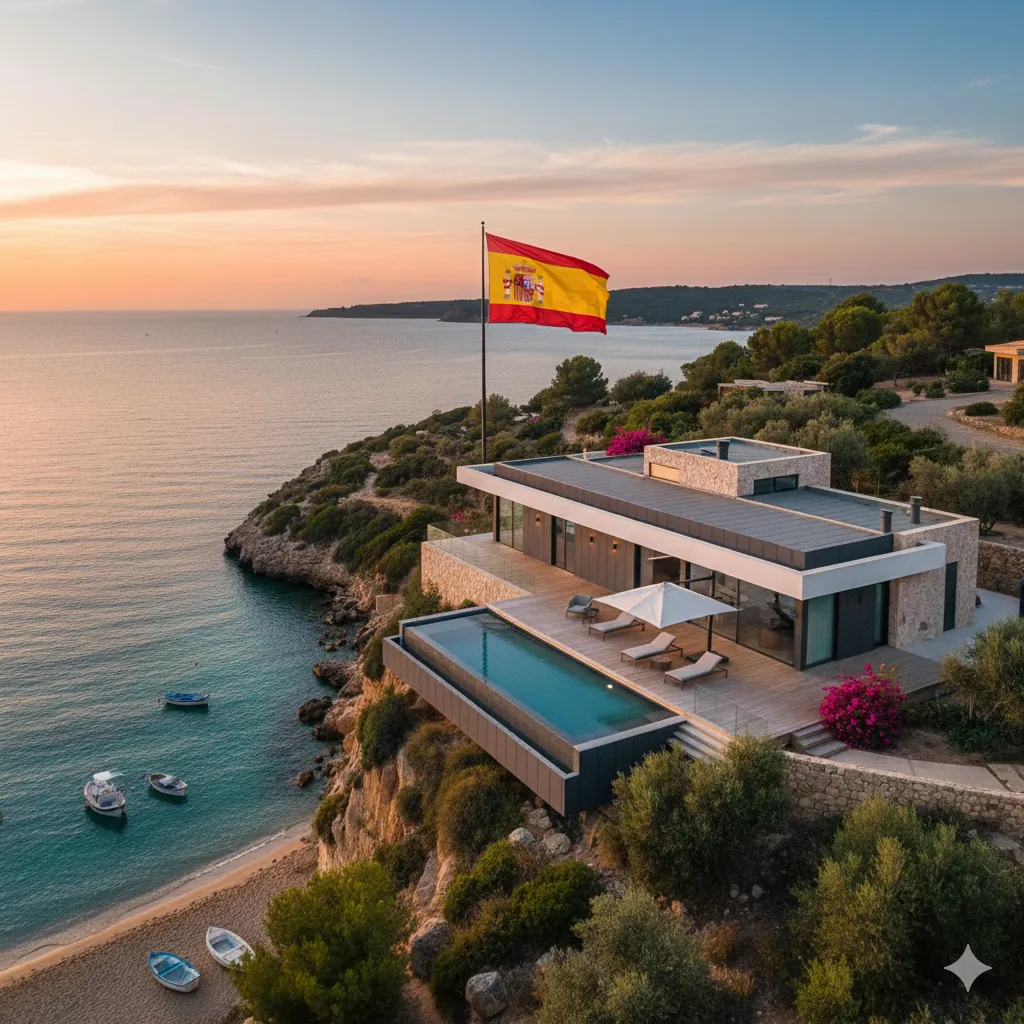
- Minimalist Villas: Sleek, glass and steel-heavy modern designs sought after in coastal areas like the Costa Blanca or Marbella.
- Rustic Finishes: Customized solutions appropriate for inland areas, often featuring stone and wood cladding that mimics the look of a traditional Spanish finca or cortijo.
- Versatile Container Homes: Beyond standard residences, container homes (casa contenedor) offer unique, industrial-chic aesthetics and are incredibly versatile for various uses, from tiny homes to pop-up shops.
- Modular Expansion: The ability to add modules vertically or horizontally as your needs change offers long-term flexibility for growing families or evolving lifestyles, making it easy to adapt even a casa prefabricada contenedor.
B. Smart Home Integration
These newly built homes are perfectly suited for integrating smart home technologies. Solar panels, heat pumps, and automated smart systems are easily installed and optimized for peak performance. Even a modern casa contenedor can be fully equipped with smart tech.
IV. Legal Processes and Requirements in Spain
Owning a prefabricated home in Spain is subject to similar legal requirements as building a traditional house. This is true for all modular homes that are permanently fixed to the land, including a casa prefabricada contenedor designed for long-term use.
A. Permitting and Zoning Regulations
- Municipal License (Licencia de Obras): You must obtain an building permit from the local town hall for your home to be considered a permanent structure (which most prefab homes, including many casa contenedor installations, are).
- Architectural Project: An architect must prepare an official project detailing the home’s placement, foundations, and compliance with local zoning rules. This is crucial for the license application, whether for a standard prefab or a casa prefabricada contenedor.
- Land Status: The land where you build must be classified as urban (urbano) or have restricted permission for construction in a rural area (rústico). Limited permissions may be available on non-urban land (often restricted to 5% of the plot and under 250m²), but this varies significantly by region. Specific regulations might apply to temporary structures like a campamento minero.
B. Technical Standards
Homes must comply with the Spanish Technical Building Code (Código Técnico de la Edificación – CTE). This ensures the structure meets all standards for structural safety, energy performance, and fire resistance. Reputable manufacturers, whether for traditional prefabs or a casa prefabricada contenedor, provide the necessary technical support to secure these certifications.
Conclusion: A Smart, Sustainable, and Accessible Future
Prefabricated houses in Spain are not just a passing fad but the future of the housing market. Their combination of speed, cost-efficiency, high quality, and design flexibility offers an outstanding solution for international buyers and locals alike looking for a modern, intelligent start to Spanish living. This versatility extends to niche applications like establishing a campamento minero with robust and quickly deployable housing, or creating unique homes using the casa contenedor concept.
Which region of Spain—the Mediterranean Coast, the Canary Islands, or Northern Spain—are you considering for your prefab home, and what is your top priority for the project: Speed, Cost, or Customization (perhaps even a unique casa contenedor design)?


