










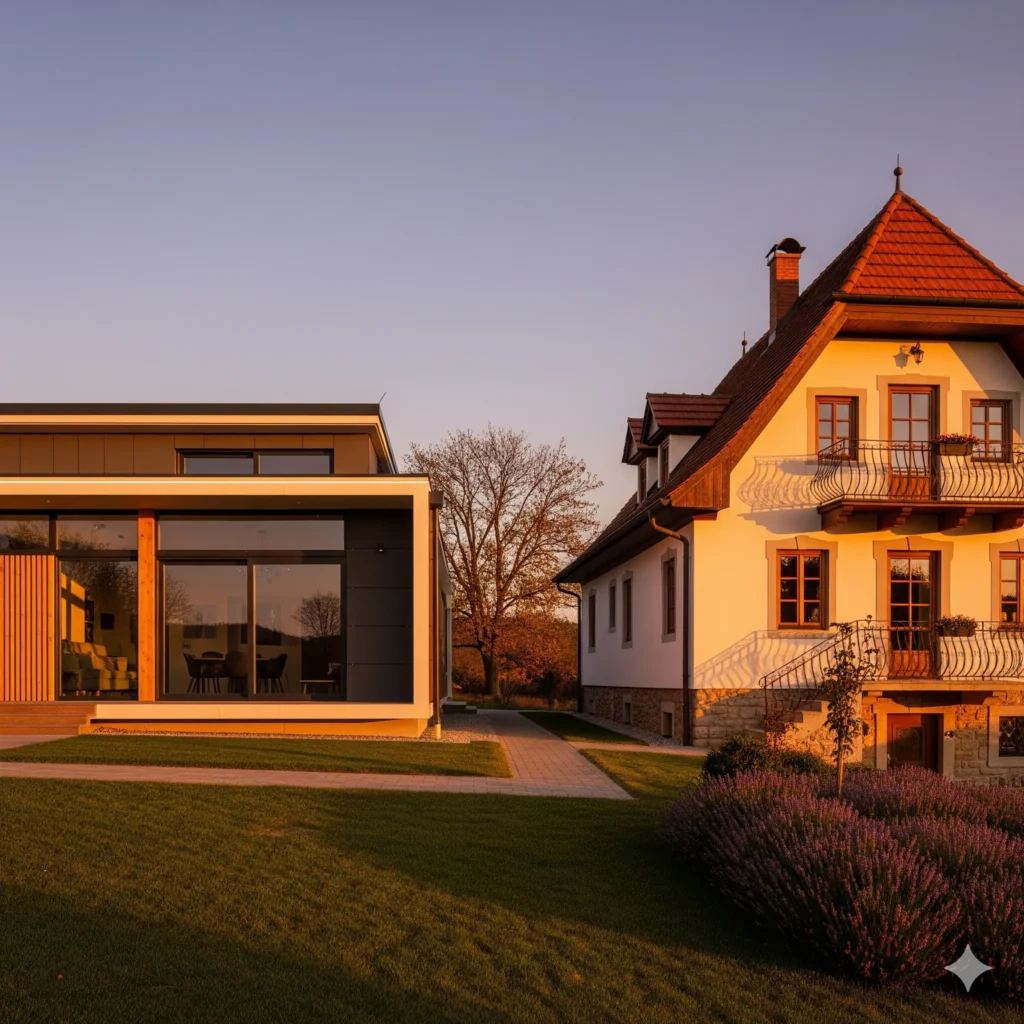
Prefab vs Traditional Homes: The Ultimate Decision-Making Guide for Europe 2025
Whether you’re strolling through Europe’s historic streets or dreaming in its green countryside, a common dream unites many of us: owning our own home. But in today’s world, the path to this dream begins with the crucial Prefab vs
Traditional Homes debate. It’s a decision about lifestyle, aesthetics, and a long-term investment. If you find yourself at this important junction, you’re in the right place. In this comprehensive guide, we will break down every aspect of prefabricated and traditional homes from the perspective of a European buyer.
Prefab vs Traditional Homes: A Quick Comparison
Before we dive into a detailed analysis, let’s look at the fundamental differences in a quick comparison table.
Prefabricated Homes: The Rise of Innovation and Efficiency
In the Prefab vs Traditional Homes discussion, prefabricated houses represent the side of innovation and efficiency. They are modern housing solutions where components are manufactured with precision technology in a factory and then assembled on the building site. Their popularity has soared across Europe in recent years, driven by a demand for sustainability and speed.
Advantages
- Speed and Time Savings: Once the foundation is laid, a prefab home can be assembled in a matter of weeks. This means you can avoid the months of chaos and uncertainty associated with a traditional construction site.
- Cost Control: Because the manufacturing process takes place in a factory, material waste is minimal, and labor costs are clearly defined. This significantly reduces the risk of exceeding the initial budget.
- Superior Quality Standards: A factory environment ensures that every component is produced under controlled conditions with millimeter precision and high-quality standards. Weather ceases to be a factor that impacts quality.
- Energy Efficiency and Sustainability: Modern prefab homes are designed with the latest insulation technologies and energy-efficient materials. In the long run, this translates to significant savings on your heating and cooling bills.
What to Consider
- Perception and Resale Value: In some regions, there may still be an outdated prejudice against prefab homes. However, this perception is rapidly changing, especially in countries like Germany and Scandinavia.
- Financing: Financing is a key factor when considering Prefab vs Traditional Homes. While some banks were cautious in the past, today, many European financial institutions view these modern structures as equivalent to traditional homes and offer competitive mortgage options.
Traditional Homes: Time-Tested Flexibility
On the other side of the Prefab vs Traditional Homes equation are the time-tested traditional builds. Constructed with the timeless harmony of brick, concrete, and mortar, they are what most people picture when they think of “home.”
Advantages
- Unlimited Design Freedom: If your dream home is entirely unique with distinct architectural details in every corner, traditional methods offer this flexibility. You can work one-on-one with an architect to bring your vision to life.
- Market Value and Investment: Traditionally built homes, especially in good locations, are often seen as a strong investment vehicle with a high potential for appreciation over time.
- Material Variety: They offer the opportunity to choose from a wide range of materials, from local stone to custom-milled wood.
What to Consider
- Long Construction Times: The construction of a traditional house can easily exceed a year, depending on factors like permit processing, weather conditions, and the availability of skilled labor.
- Budget Overruns: Unforeseen problems on the construction site, fluctuations in material prices, and labor delays can cause the final cost to exceed the initial budget by 15-20%.
- Variable Quality: The quality of the build is heavily dependent on the experience and work ethic of the on-site team.
Key Factors to Consider When Building in Europe
The choice in the Prefab vs Traditional Homes dilemma also depends heavily on specific European factors that must be considered for a successful project.
- Local Building Codes: Energy efficiency standards in Germany (EnEV), seismic regulations in France, or insulation rules for harsh winters in Scandinavian countries are all different. The home you choose must be fully compliant.
- Land and Infrastructure: For both types of homes, you will need a suitable plot of land with access to infrastructure like roads, water, and electricity.
- Climate: A house designed for the Spanish sun may not be suitable for the Norwegian winter. The building’s insulation values and materials must be compatible with your region’s climate.
Conclusion: Which is the Right Choice for You?
As we’ve seen, the answer to the Prefab vs Traditional Homes question isn’t simple. The right choice is deeply personal and depends entirely on your priorities.
- If time, a fixed budget, and energy efficiency are your top priorities, and you appreciate modern design, then a prefab home is likely an excellent choice.
- If unique architectural design and full control over the process are paramount, and you view your home as a long-term investment, then a traditional home might be the better path.
Ultimately, making the right choice in the Prefab vs Traditional Homes debate comes down to aligning your vision with the right building method. Use this guide to lay the foundation for your future home with solid knowledge.


