

















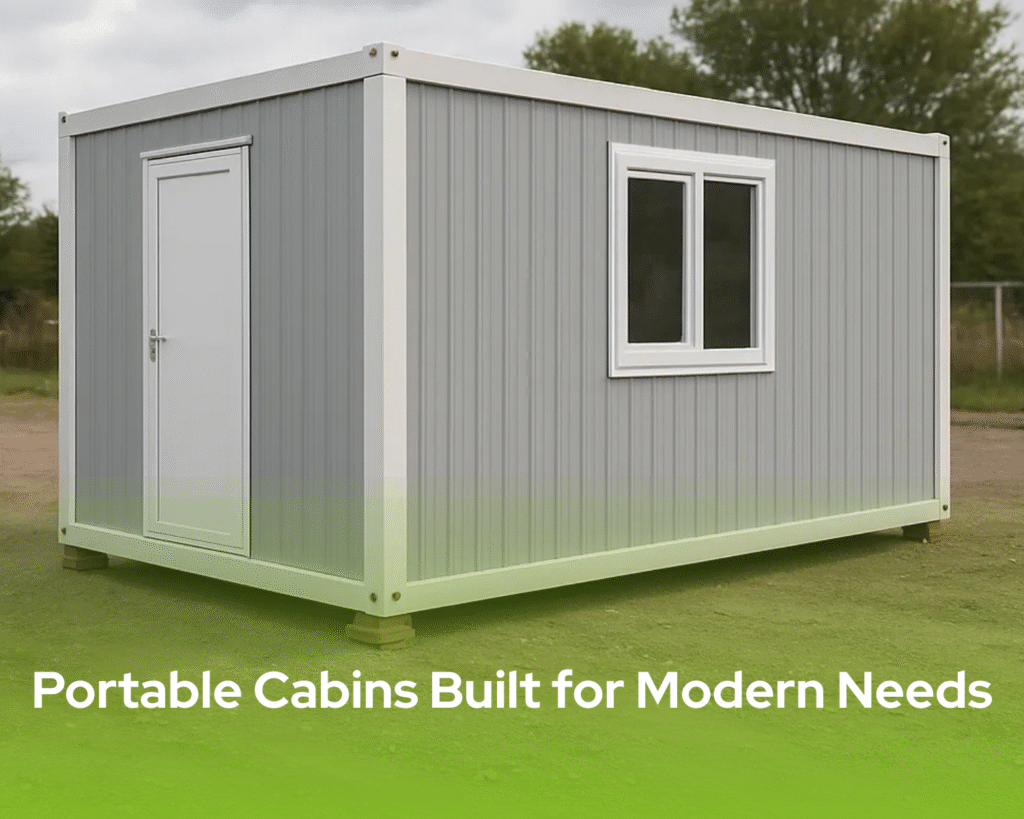
In the modern construction landscape, agility and durability are paramount. Businesses and project managers no longer have the luxury of waiting months for traditional concrete structures. Whether you need a site office, a security unit, or a temporary accommodation facility, the solution lies in high-quality portable cabins. Understanding the engineering behind these structures reveals why they are the superior choice for rapid deployment.
At Pramo Prefabricated, we believe that transparency in production builds trust. In this detailed guide, we will walk you through the entire portable cabins build process, highlighting the advanced technologies, materials, and expertise that define our industry-leading modular structures.
What Defines the Portable Cabins Build Process?
The concept of a portable cabins build is often misunderstood as merely assembling simple sheets of metal. In reality, it is a sophisticated industrial process that combines structural engineering, material science, and architectural design.
Unlike traditional construction, which is subject to weather delays and site inconsistencies, our manufacturing takes place in a controlled factory environment. This ensures that every stage of the portable cabins build meets strict quality control standards before the unit ever reaches your site. From the initial steel roll-forming to the final electrical testing, precision is our priority.
1. Design and Structural Engineering
Every robust structure begins with a blueprint. The first phase of the portable cabins build involves rigorous calculation and 3D modeling.
Static Calculations and Safety
Before any material is cut, our engineers calculate the static loads. This includes analyzing resistance to wind pressure, snow loads, and seismic activity. A professional portable cabins build must guarantee safety not just for today, but for years of heavy use in harsh environments.
Material Optimization
Using advanced software, we optimize the material usage to reduce waste and ensure the structure is lightweight yet incredibly strong. This planning phase is crucial for cost-efficiency, allowing us to pass savings on to our customers without compromising on the structural integrity of the cabin.
2. The Steel Skeleton: The Core of Durability
The backbone of any modular unit is its chassis. In the portable cabins build workflow at Pramo Prefabricated, we utilize high-grade galvanized steel to prevent corrosion.
-
Galvanized Steel Frame: We use galvanized steel profiles that offer superior rust resistance. This is essential for cabins that will be deployed in humid or coastal areas.
-
Bolt-and-Nut Technology: Unlike old-fashioned welding methods which can be prone to cracking under stress or vibration, our modern portable cabins build relies on bolt-and-nut systems. This mechanical connection allows the structure to flex slightly during transport or earthquakes, preventing structural failure.
-
Reinforced Chassis: The floor chassis is reinforced with frequent intervals of steel profiles to prevent the floor from bouncing or sagging under heavy foot traffic.
3. Wall and Roof Insulation Technology
One of the most critical aspects of the portable cabins build is thermal insulation. A cabin that cannot retain heat in winter or keep cool in summer is inefficient and uncomfortable.
Sandwich Panel Systems
We primarily use Sandwich Panels for walls and roofs. These panels consist of two metal sheets with an insulating core.
-
EPS (Expanded Polystyrene): This is the standard for cost-effective thermal insulation. It is lightweight and provides excellent resistance to heat transfer.
-
Rock Wool (Stone Wool): For projects requiring high fire safety standards, we integrate rock wool panels into the portable cabins build. These are A1-class fire-resistant materials, making them ideal for oil and gas sites or strict industrial zones.
Watertight Roof Design
Water ingress is the enemy of modular structures. Our specialized roof design incorporates hidden gutters and specific drainage slopes. This ensures that rainwater is channeled away from the structure effectively, protecting the integrity of the portable cabins build over the long term.

4. Flooring, Windows, and Doors
Once the shell is complete, the portable cabins build moves to the finishing stage, where comfort and functionality are installed.
-
Flooring Layers: We start with a fiber cement board (betopan) base, which is water and fire-resistant. On top of this, we apply high-quality PVC vinyl flooring that is easy to clean, antibacterial, and aesthetically pleasing.
-
uPVC Windows: To complement the wall insulation, we install double-glazed uPVC windows. These provide excellent acoustic insulation and thermal efficiency.
-
Secure Doors: The exterior doors are typically steel-insulated doors or aluminum glazed doors, equipped with heavy-duty locks and weather seals to prevent drafts.
Why Choose Pramo Prefabricated?
With many suppliers in the market, the quality of the portable cabins build can vary significantly. Here is why Pramo Prefabricated stands out:
Precision Manufacturing
We utilize automated production lines. This minimizes human error and ensures that every panel and profile fits perfectly. This precision is vital for the airtightness and energy efficiency of the final product.
Rapid Turnaround
Because our portable cabins build process is streamlined and stock-supported, we can deliver units in a fraction of the time required for traditional buildings. We understand that in business, time is money.
Customization Capabilities
We don’t just sell off-the-shelf products. If your project requires specific dimensions, extra windows, specific partition walls, or unique color codes, our flexible manufacturing process can accommodate these needs easily.
5. Sustainability and Environmental Impact
Modern construction must be eco-conscious. The portable cabins build method is inherently more sustainable than concrete construction.
-
Reduced Waste: Factory production allows for precise material cutting, drastically reducing scrap waste.
-
Recyclability: The primary materials used (steel, aluminum, glass, and EPS) are highly recyclable.
-
Minimal Site Disturbance: Since these cabins require only a simple level ground or concrete pads, they do not destroy the landscape or require deep excavation. This makes the portable cabins build an environmentally friendly choice for temporary or semi-permanent needs.
Applications of Portable Cabins
The versatility of the portable cabins build allows these units to serve a multitude of sectors:
-
Construction Sites: As site offices, changing rooms, and dining halls.
-
Security Sectors: As guard booths and checkpoints with 360-degree visibility.
-
Commercial Use: As ticket booths, kiosks, or pop-up retail stores.
-
Sanitary Facilities: As standalone WC and shower units for events or parks.
6. Maintenance and Longevity
A common question regards the lifespan of these structures. A high-quality portable cabins build results in a product that can last for decades with minimal maintenance.
-
Exterior Care: Occasional cleaning of the exterior panels and checking the roof gutters for leaves or debris is usually sufficient.
-
Paint: The electrostatic powder coating on the metal parts is highly durable, but touching up deep scratches will prevent rust in the long run.
-
Relocatable: Because the structure is bolted, it can be disassembled or lifted by crane and moved to a new location without losing structural integrity. This reusability is a hallmark of a superior portable cabins build.
Conclusion: Investing in Quality
When you invest in a modular structure, you are investing in the quality of the manufacturing process. At Pramo Prefabricated, we take pride in every screw, panel, and profile. Our rigorous portable cabins build standards ensure that you receive a product that is safe, durable, and aesthetically pleasing.
Whether you are setting up a construction camp or adding a security unit to your facility, trust the experts who understand the science of building. Contact us today to discuss your requirements and let us provide the perfect space solution for you.
Frequently Asked Questions (FAQ)
1. How long does the portable cabins build process take? Standard units can often be dispatched from stock immediately. For custom orders, the production time is incredibly fast, usually taking just a few days depending on the quantity and specifications.
2. Are the cabins suitable for very cold or hot climates? Yes. The portable cabins build process allows us to adjust insulation thickness. We can use thicker panels (e.g., 80mm or 100mm) or Rock Wool to ensure comfort in extreme climates.
3. Can I move the cabin after it is installed? Absolutely. Portability is the core advantage. Our cabins are designed with lifting lugs for cranes, allowing them to be easily transported to different locations as your project needs change.
4. Do the cabins come with electrical and plumbing installed? Yes. Our cabins are “Plug and Play.” The electrical wiring, sockets, fuse boxes, and plumbing pipes are all installed during the factory assembly. You simply need to connect the mains supply on-site.


