



















Panel Cabin Solutions: Modern, Flexible and Cost-Effective Spaces
Introduction
In today’s construction and housing markets, there is growing demand for building solutions that balance speed, cost and durability. Traditional concrete structures often require months of work and large budgets. By contrast, the panel cabin offers a modern alternative: a prefabricated unit built from insulated panels, engineered for fast installation and versatile use. These cabins are now widely applied across industries, from construction sites to educational facilities, making them one of the most adaptable modular solutions available today.
What Is a Panel Cabin?
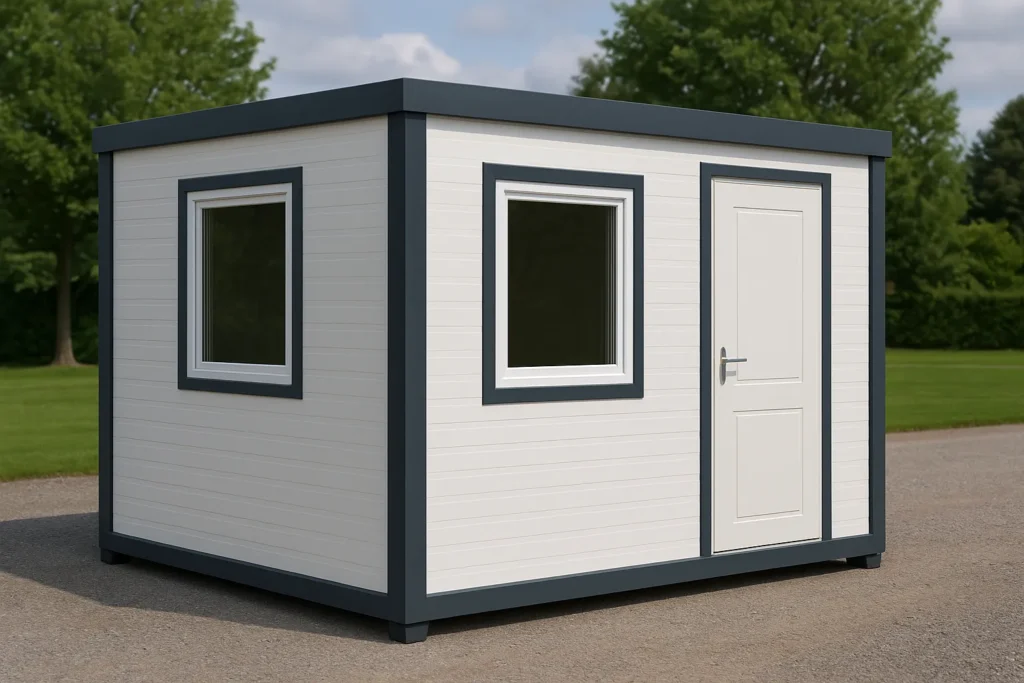
A panel cabin is a prefabricated building created with sandwich panels that combine steel cladding and insulation materials such as polyurethane, rock wool or EPS. This composition provides both strength and thermal efficiency. Designed as modular systems, these cabins can be delivered in flat-pack form and assembled quickly on prepared ground.
Because they are portable and adaptable, panel cabins are often compared to prefabricated cabins or portable cabins. The key difference is their panel-based structure, which allows flexible customization and relocation.
Advantages of Panel Cabins
Panel cabins bring several advantages compared to conventional buildings:
-
Fast Assembly – Most units can be installed in a single day with minimal labour.
-
Cost Savings – Prefabrication reduces material waste and project costs.
-
Thermal Performance – Insulated walls improve comfort in hot and cold conditions.
-
Durability – Steel surfaces resist corrosion, ensuring long service life.
-
Adaptability – Units can serve as offices, dormitories, kiosks or storage rooms.
-
Mobility – Like other modular cabins, they can be disassembled and moved to new sites.
Common Applications
Panel cabins are highly versatile and widely used in different environments:
-
Construction Sites: Temporary offices, sanitary units, rest areas and worker housing.
-
Education: Modular classrooms and administrative buildings during renovations.
-
Healthcare: Mobile clinics, vaccination points and emergency testing facilities.
-
Commerce: Pop-up shops, portable sales offices and event kiosks.
-
Security: Guard cabins and checkpoint shelters.
-
Events: Ticket counters, backstage facilities and festival amenities.
-
Residential: Short-term accommodation, student housing or holiday cabins.
Technical Design & Features
Modern modular cabins are engineered to deliver reliable performance in daily use:
-
Panels: Typically 50–100 mm thick, providing insulation and structural integrity.
-
Roofing: Sloped or flat designs that manage water and snow loads.
-
Openings: PVC or aluminium doors and windows with optional double glazing.
-
Utilities: Pre-installed electrical wiring, lighting and plumbing lines.
-
Optional Additions: HVAC systems, partitions, sanitary fixtures and furniture.
By combining these features, panel cabins deliver the comfort of permanent buildings while maintaining portability.
Cost and Value
The price of a panel cabin depends on size, insulation type, interior design and equipment. A small guard unit is inexpensive, while a fully equipped office or living cabin costs more. However, compared to permanent buildings, modular cabins remain much more affordable.
The real value comes from:
-
Reduced construction time
-
Lower maintenance requirements
-
Energy efficiency over the long term
-
Reusability and easy relocation
Sustainability and Future Outlook
As industries seek greener solutions, insulated cabins are increasingly built with recyclable materials and energy-efficient systems. Solar panels, water-saving fixtures and smart ventilation are now being integrated. This trend ensures that panel cabins are not only fast and affordable but also aligned with global sustainability goals.
Future designs are expected to include smart modular spaces, integrating IoT for lighting, security and energy monitoring.
Buyer’s Insights: Frequently Asked Questions
Are panel cabins permanent?
Yes, they can last decades with proper maintenance.
Do they work in extreme climates?
With suitable insulation and ventilation, they perform well in both hot and cold environments.
Can they be customized?
Yes, layouts, finishes and sizes can be adapted.
Do they need foundations?
Usually, a simple concrete pad or steel base is sufficient.
How fast can they be delivered?
Most units are ready for shipment within weeks, and installation takes only days.
Key Takeaways
The panel cabin has become one of the most practical modular solutions for businesses, communities and institutions. It combines speed, affordability and adaptability while offering durability and comfort. Whether as a construction office, a temporary classroom, or a mobile clinic, panel cabins deliver solutions that align with today’s demand for flexibility and cost efficiency.
As the need for sustainable, portable and affordable buildings continues to rise, panel cabins are set to remain at the forefront of modular innovation.
Information only: This article offers general insights. It is not legal, financial, technical or planning advice. Requirements vary by country and municipality.


