
















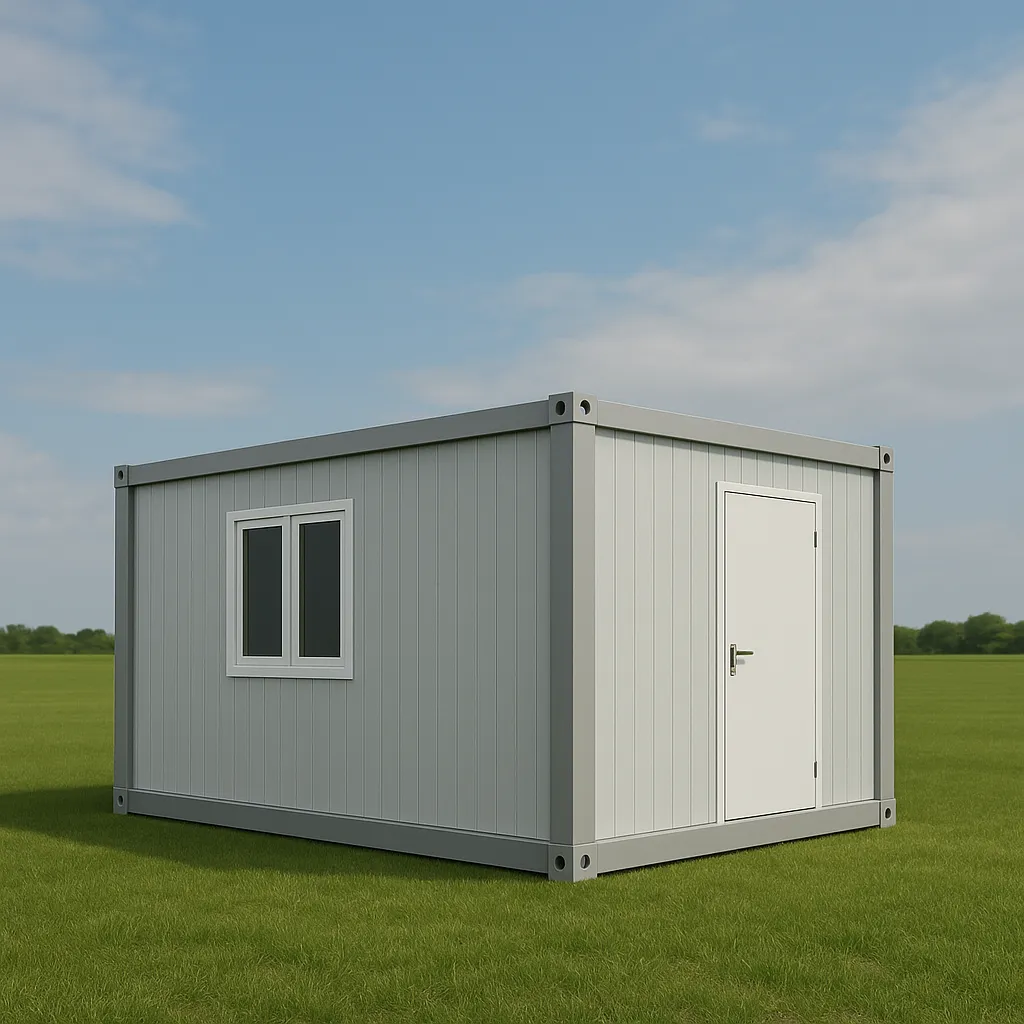
Monoblock Container Solutions for Contemporary Modular Demands
Introduction
In today’s fast-moving world, businesses and individuals seek fast, reliable and cost-effective space solutions. Among the many options in modular construction, the monoblock container stands out as one of the most practical. Unlike multi-part structures, monoblock containers are delivered as a single, fully assembled unit, ready for immediate use. This makes them ideal for construction sites, temporary offices, accommodation, security points and even long-term storage.
What Is a Monoblock Container?
A monoblock container is a prefabricated modular unit produced as a single piece in the factory. Walls, floors, ceilings, insulation, electrical wiring and even fixtures are pre-installed. Once delivered to the site, it can be placed on prepared ground and connected to utilities within hours.
-
All-in-one solution: No need for assembly at site.
-
Durability: Built from steel frames and insulated panels.
-
Mobility: Easy to transport and relocate.
This efficiency is why many organizations prefer monoblock containers over traditional site-built structures.
Key Advantages of Monoblock Containers
-
Speed of Deployment – Delivered ready to use, ideal for emergency or fast projects.
-
Cost Efficiency – Controlled factory production lowers installation and labour costs.
-
Durability and Safety – Resistant to harsh weather with galvanized steel and protective coatings.
-
Comfort and Insulation – Panels provide thermal balance and soundproofing.
-
Flexibility of Use – Adaptable for housing, offices, retail or security.
-
Easy Relocation – Units can be lifted and moved without dismantling.
Applications Across Sectors
-
Construction: Site offices, changing rooms, worker housing.
-
Education: Temporary classrooms, administration areas, exam centers.
-
Healthcare: Mobile clinics, vaccination points, testing labs.
-
Commercial: Pop-up shops, ticket counters, event kiosks.
-
Security: Guard stations and entry control cabins.
-
Military & Relief: Accommodation in remote bases, disaster relief shelters, field hospitals.
-
Events & Tourism: Ticket booths, portable reception cabins, even compact tourism offices.
The versatility of monoblock containers makes them a trusted solution across industries.
Price and Value Factors
The cost of a monoblock container depends on:
-
Size and dimensions
-
Level of insulation and panel thickness
-
Electrical, plumbing and HVAC installations
-
Extra features like restrooms, kitchens or reinforced doors
-
Transport and site preparation costs
While base models remain affordable, customizations increase price but also add long-term comfort and usability.
Maintenance and Longevity
A key reason behind the popularity of monoblock containers is their long lifespan. With anti-corrosion coatings, insulated walls and quality steel frames, many units last for decades. Simple maintenance such as repainting, replacing seals, or checking electrical connections ensures they remain functional even in demanding environments.
Why Monoblock Instead of Modular Assembly?
Flat-pack or panel-based systems require on-site assembly, while monoblock containers eliminate that step. The result is:
-
Faster setup with no risk of incomplete installation
-
Lower chance of errors or delays
-
Immediate readiness for use
-
Simple relocation without dismantling
For projects where time is critical, monoblock is the clear winner.
Market Outlook for 2025
With growing urban populations, rising construction costs and demand for sustainable solutions, monoblock containers are expanding globally. Governments rely on them for disaster relief housing, while private firms use them for mobile or temporary operations. Their integration with solar systems and energy-efficient designs shows their potential in the green building sector. In addition, digital technologies like IoT monitoring and smart locks are being integrated into containers, making them safer and more connected than ever.
Buyer’s Guide: Things to Consider
Are monoblock containers long-lasting?
Yes. With regular maintenance, they can serve as permanent solutions.
Do they need foundations?
Only simple ground leveling; heavy foundations are not required.
Can they be customized?
Absolutely. Interiors can be designed with offices, restrooms or living areas.
How fast can they be delivered?
Often within a few weeks, depending on production capacity.
Are they sustainable?
Yes. Many models use recyclable materials and can integrate solar energy systems.
Key Takeaways
The monoblock container is more than a temporary structure. It is a durable, adaptable and cost-effective solution for housing, commerce, security and emergency needs. By delivering instant usability with minimal setup, these containers embody the speed and flexibility required in modern living and working environments. As innovation continues, their role in global construction and relief efforts will only grow stronger.


