




















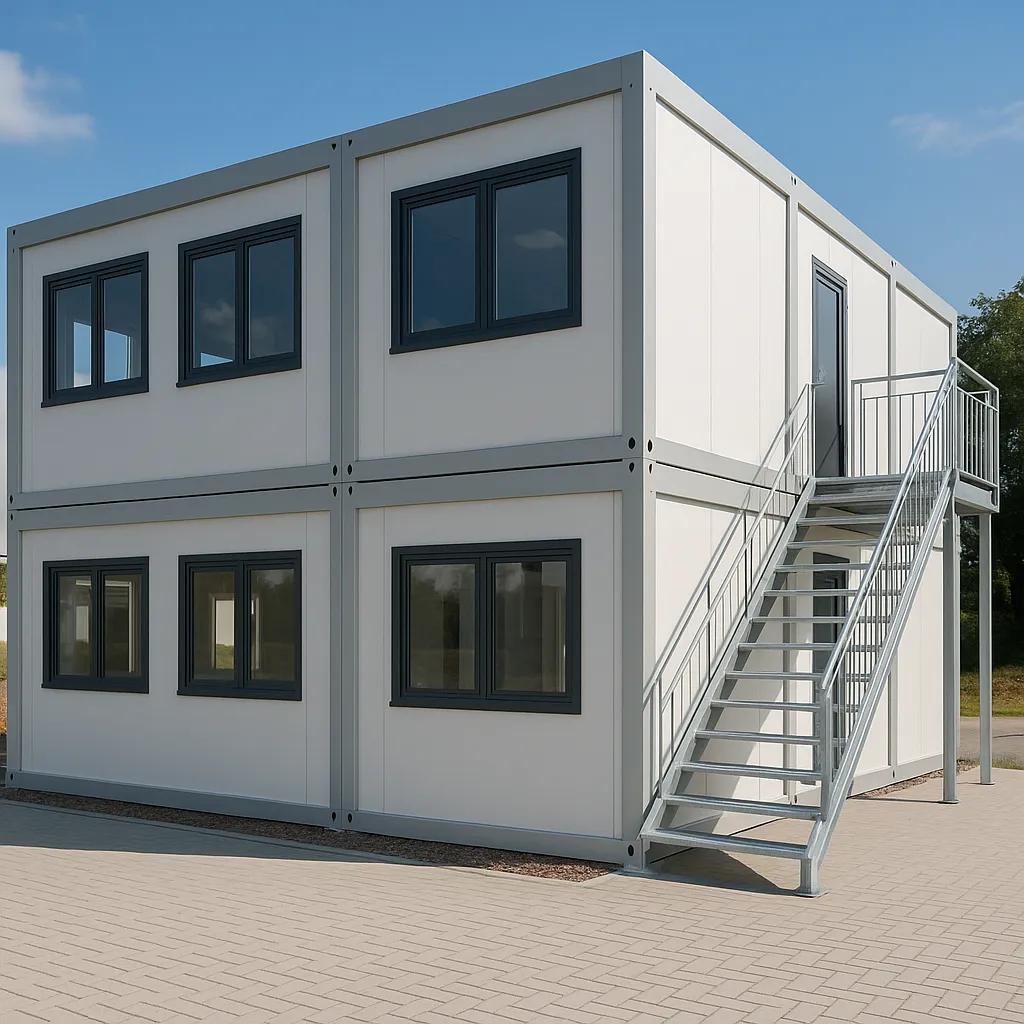
What Is a Modular Office?
A modular office is a workplace facility built from prefabricated modules produced in factories. These modules whether single units or multi storey blocks are delivered to site and assembled into a fully functional office space. Because fabrication and site preparation run in parallel, projects can be delivered in a fraction of the time required for conventional builds.
Key Benefits
- Speed: Modular offices are operational in weeks rather than months.
- Flexibility: Layouts adapt to open plan zones, private offices or meeting rooms.
- Cost Efficiency: Factory processes reduce waste and control expenses.
- Sustainability: Recyclable materials and energy-efficient envelopes lower impact.
- Scalability: Additional modules can be added as organizations grow.
Where Modular Offices Work Best
Modular office solutions are used by corporations, public institutions and project-based teams. Common applications include:
- Corporate headquarters requiring fast expansion
- Temporary project offices at construction or mining sites
- Government service centers and municipal buildings
- Start-up hubs or co-working spaces with evolving needs
- Educational or healthcare administration offices
Design Features
Modern modular office buildings are designed with employee wellbeing and operational efficiency in mind. Large windows maximize daylight, while advanced HVAC systems ensure healthy air quality. Acoustic insulation allows privacy for meetings, and smart cabling supports digital connectivity. Interiors can be customized with branding, ergonomic furniture and breakout zones that foster collaboration.
Cost Considerations
While costs vary by specification and size, modular offices are often more affordable than conventional offices when total project time is considered. Faster delivery reduces financing costs, while factory-controlled production minimizes delays. Organizations also benefit from predictable budgets since scope is clearly defined before production begins.
Sustainability and Future Proofing
Because modules are built with recyclable steel and panels, modular offices support circular construction practices. Their energy-efficient envelopes reduce heating and cooling loads. Many are designed with rooftop solar readiness and EV charging infrastructure, aligning with the sustainability targets of modern businesses.
FAQ
Are modular offices permanent? Yes. While some are temporary, many are designed for decades of use with full compliance to building codes.
Can they be relocated? Certain modular units can be dismantled and moved to new sites if required.
Do modular offices meet workplace standards? Yes. They are engineered to comply with fire safety, accessibility and workplace regulations.
How long does installation take? Smaller modular offices may be operational within weeks, while larger complexes require more time for utilities and commissioning.
Conclusion
Modular office buildings combine speed, flexibility and sustainability to meet the demands of modern workplaces. Whether for corporations, start-ups or public institutions, modular solutions provide scalable and cost-effective workspaces that evolve alongside organizational needs. As the future of work continues to shift, modular offices will remain a cornerstone of efficient and adaptable workplace design.


