




















A Brief History of Security Cabins
Originally, security personnel relied on small wooden booths or improvised shelters at gates. Over the years, these evolved into permanent guardhouses built with brick or concrete. However, such structures were expensive and inflexible. Prefabricated security cabins transformed the concept by combining durability with portability. Today, they are designed using steel, glass-reinforced polyester and insulated panels, ensuring resilience without long construction times.
What Is a Security Cabin?
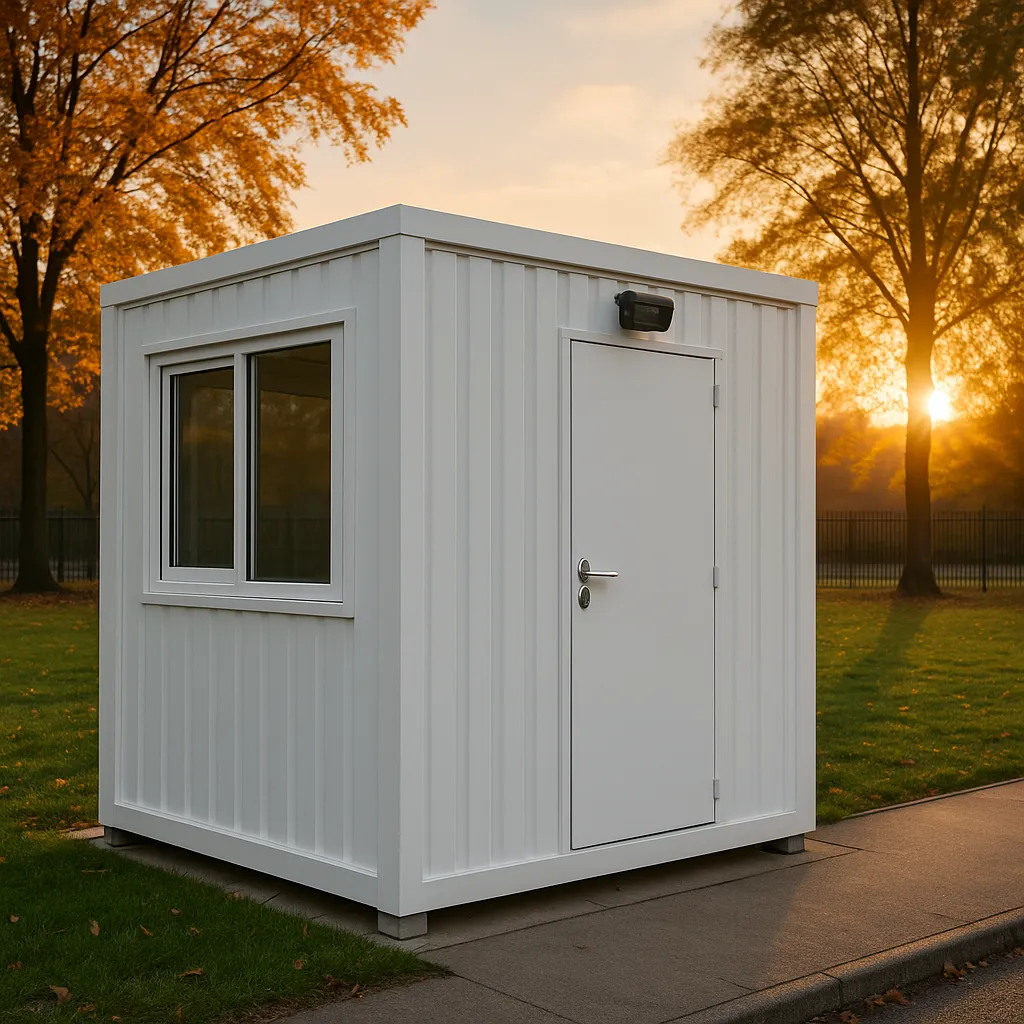
A security cabin is a prefabricated structure designed to house security personnel. It provides protection from weather, comfort during long shifts and visibility for monitoring surroundings. Security cabins can be installed at entrances of factories, residential complexes, parking areas, shopping malls, ports and construction sites.
Key Features of Modern Security Cabins
- Durable materials: Steel, GRP or sandwich panels ensure long-lasting performance.
- Thermal and sound insulation: Creates comfortable environments in all seasons.
- Visibility: Large windows allow guards to monitor entrances and traffic flow.
- Mobility: Prefab cabins can be relocated when site needs change.
- Customization: Sizes, interior layouts and finishes tailored to customer needs.
Modern cabins also include ergonomic design, with adequate space for chairs, desks and storage. This helps guards perform duties effectively, even during long night shifts.
Benefits of Security Cabins
Security cabins provide an effective solution for enhancing site safety. Unlike permanent guardhouses, prefab cabins are delivered quickly and require minimal site preparation. They also reduce costs by avoiding traditional construction methods.
Additionally, cabins can include features like air conditioning, ergonomic furniture and communication systems, ensuring guards can perform duties effectively without discomfort. Some models also integrate small rest areas or restroom facilities, enabling staff to stay focused during extended shifts.
Where Security Cabins Are Used
- Residential complexes and gated communities
- Factories, warehouses and logistics hubs
- Construction sites and infrastructure projects
- Parking areas and transportation terminals
- Events, stadiums and temporary venues
The versatility of security cabins makes them suitable for both permanent installations and temporary events where safety management is critical.
Technology Integration
In 2025, security cabins are more than physical shelters. They are increasingly integrated with technology such as CCTV cameras, biometric scanners, alarm systems and remote monitoring networks. Some cabins come pre-wired for smart devices, making it easier for organizations to connect them to centralized security systems. This digital integration enhances real-time response and reduces risks for both personnel and property.
Global Trends Driving Demand
Urbanization and the rise of large-scale events have created higher demand for modular security cabins worldwide. In regions like the Middle East and Asia, rapid infrastructure growth means constant site monitoring is essential. In Europe, sustainability is a key driver, with cabins made from recyclable materials and designed for energy efficiency. Across the globe, security cabins are becoming an integral part of safety strategies for both private and public sectors.
Cost Considerations
The cost of a security cabin depends on factors such as size, material, insulation, and optional features. A basic cabin with standard finishes is budget-friendly, while larger or customized cabins with advanced technology cost more. Even at higher price points, prefab cabins remain affordable compared to building permanent guardhouses. Organizations often consider the long-term benefits—mobility, durability and reduced maintenance—when evaluating total cost of ownership.
The Future of Security Cabins
Looking ahead, security cabins will play an even larger role in smart city planning. Cabins may include renewable energy systems, facial recognition access points, and IoT-enabled monitoring tools. Their design will continue to prioritize sustainability, comfort and integration with digital ecosystems. As security challenges evolve, prefab cabins will adapt quickly, ensuring that they remain an indispensable part of modern infrastructure.
FAQ
Are security cabins permanent? Many are designed for long-term use, but they can be relocated if needed.
Can security cabins include restrooms? Yes, larger cabins can be equipped with restrooms or storage areas.
How long does installation take? Prefabricated cabins are usually ready for use within days of delivery.
Are they weather-resistant? Modern cabins include insulation and coatings for durability in different climates.
Conclusion
Security cabins play a vital role in ensuring safety and providing comfortable workplaces for guards. Their durability, adaptability and cost-effectiveness make them ideal for residential, industrial and public spaces. With advances in design and technology, they are evolving into smart safety hubs that can integrate with larger security systems. In a world where security is increasingly important, prefab cabins deliver practical solutions for both long-term and temporary needs.


