




















A Paradigm Shift in Construction: The Role of Modern Construction Methods
The construction sector has historically been one of the slowest industries to adapt to innovation. Projects are often defined by chronic issues like unpredictable delays, budget overruns, and quality inconsistencies. However, in today’s fast-paced economic climate, this old model is no longer sustainable. Companies must enter the market faster, control their costs, and achieve higher quality standards to remain competitive.
At this juncture, the industry is experiencing a paradigm shift. At the center of this change are modern construction methods based on efficiency, speed, and predictability. This new approach doesn’t just build better buildings; it fundamentally redefines the process of how we build.
The Challenge: Unpredictable Timelines and Delays
- The Problem: The greatest enemy of a traditional construction project is uncertainty. Adverse weather conditions, coordination problems between different teams (plasterers, electricians, plumbers), and supply chain disruptions can cause projects to halt for weeks, or even months. These delays are not just a loss of time but also a significant financial burden, directly and negatively impacting the return on investment (ROI).
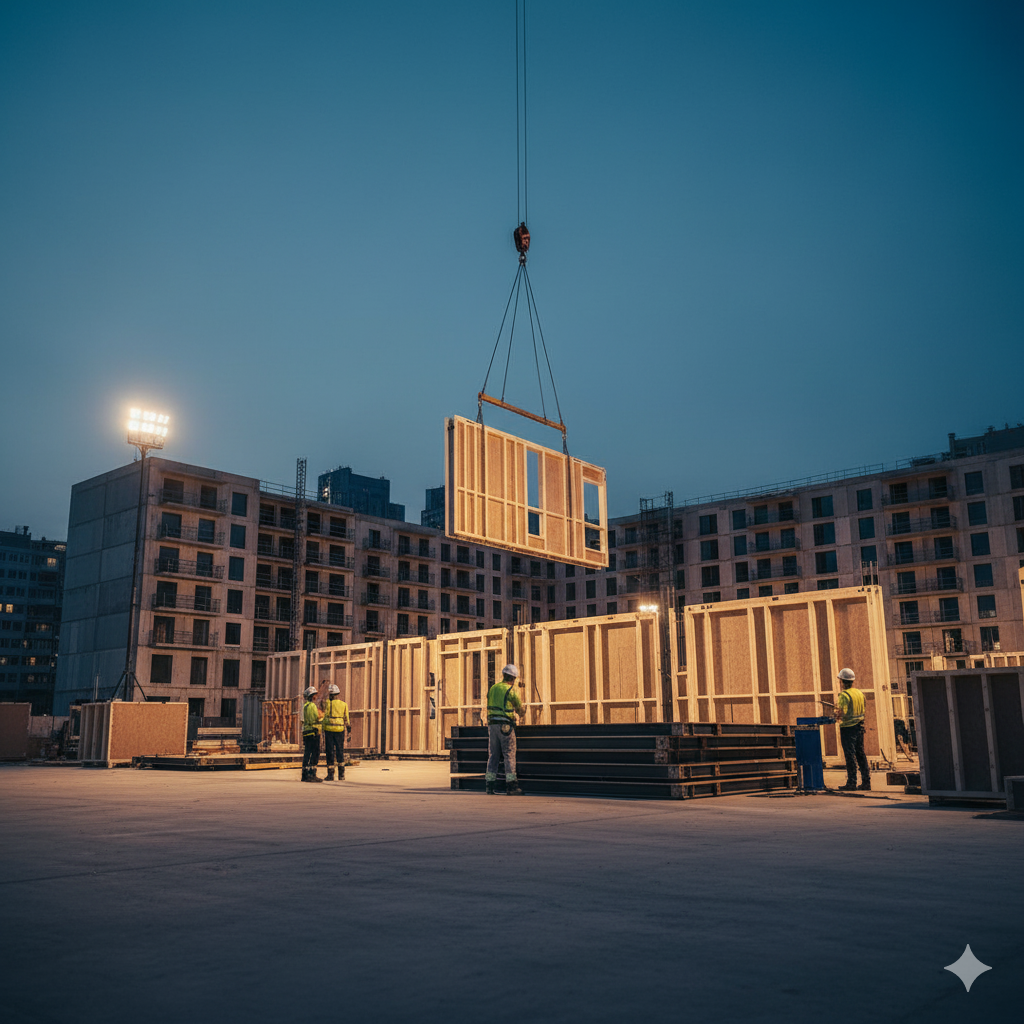
- The Solution: Modern construction methods solve this problem by moving construction from the job site to the factory. The main structural components are manufactured in high-tech factory environments, completely independent of the climate. This entirely eliminates weather-related delays. While foundation work proceeds on-site, the building itself is being manufactured in parallel. For turnkey prefabricated buildings, this parallel workflow can shorten project timelines by up to 50% compared to traditional methods.
The Challenge: Quality Control and Material Waste
- The Problem: In an on-site environment, quality is largely dependent on the skill of the crew on any given day and the immediate conditions. This can lead to inconsistencies in the final product. Furthermore, significant material waste occurs during on-site cutting and fitting processes. This waste increases costs and enlarges the project’s environmental footprint.
- The Solution: Factory-based production revolutionizes quality control. Thanks to Computer-Aided Design (CAD) and automated systems, every component is produced with millimeter precision. Materials like light steel structures offer maximum durability and a perfect fit through this precise engineering. Controlled production is a standard for modern construction methods, minimizing material waste and contributing to both the budget and the environment.
The Challenge: Budget Uncertainty and Cost Overruns
- The Problem: The delays, manufacturing errors, and material waste in traditional projects are directly reflected in the budget. It is common for the final cost to significantly exceed the initial estimate. This financial risk is the single biggest deterrent for many investors.
- The Solution: Modern construction methods like prefabrication provide unprecedented control over costs. Because the production process and material requirements are clear from the outset, the budget is largely fixed. Surprise expenses and additional costs from delays are eliminated. Modular solutions, especially container structures, maximize this certainty with the advantages of clear costs and ultra-fast installation.
In conclusion, modern construction methods are no longer an alternative but a necessity for gaining a competitive advantage and adapting to the future. This is not just about building faster; it’s about building smarter, more efficiently, and more predictably. The time has come to leave the uncertainties of the traditional model behind and take control of your project’s future.


