




















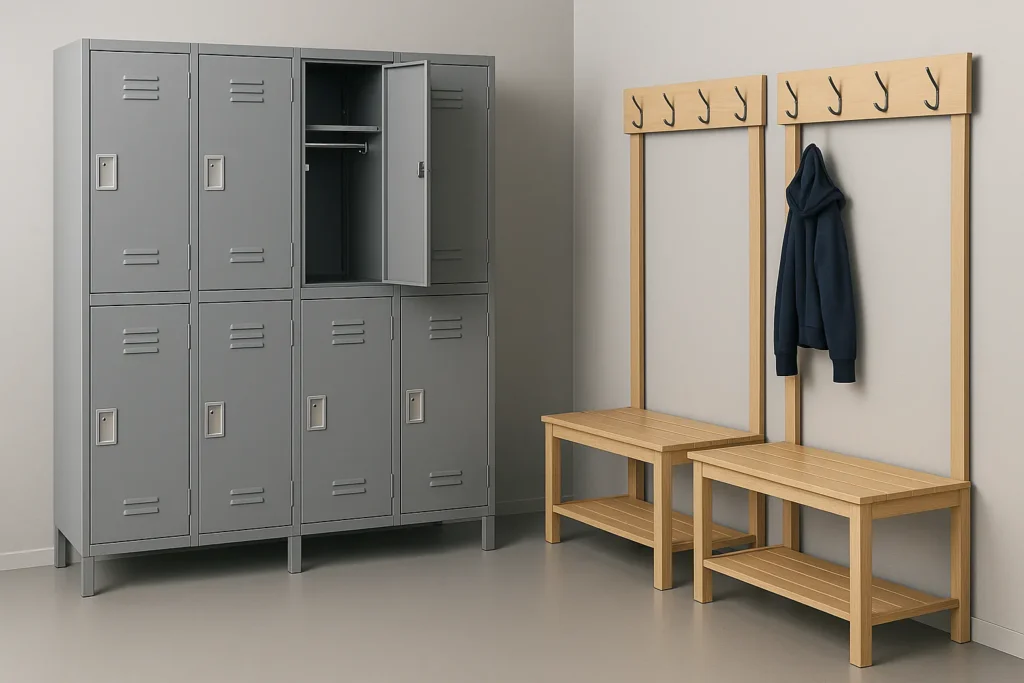
Locker Cabinets and Changing Rooms in Modular Containers
What They Are
Locker cabinets are purpose-built storage units with lockable compartments sized for clothing, bags, electronics or equipment. Changing cabinets refer to larger formations that combine seating, coat rails, showers and washbasins. In a containerised format, the furniture, partitions and services (lighting, HVAC, plumbing) are installed at the factory so the unit arrives fully fitted. The result is a consistent, hygienic space meeting workplace and sport standards.
Why Use Containers
- Speed: Factory fit-out in parallel with site preparation compresses programme time.
- Mobility: Units move as projects evolve—ideal for seasonal sites and events.
- Scalability: Add or remove modules to match headcount without rebuilding.
- Predictable quality: Repeated details, tested assemblies and QA processes.
Materials & Hygiene
For heavy daily use, choose powder-coated steel lockers with ventilation slots and concealed hinges. ABS or HPL doors resist moisture in wet areas; stainless components withstand aggressive cleaning. Antibacterial floor coverings, coved skirting and seamless wall panels minimise dirt traps. Where odours are a concern, specify mechanical extract with humidity control and a maintenance-friendly filter position.
Design Features That Matter
- Locker layout: mix single-tier (bulky gear) with double-/triple-tier for day storage.
- Security: cam locks, hasp & staple for padlocks, or RFID smart locks with audit trail.
- Accessibility: clear aisles, lowered lockers and accessible showers/WCs.
- Comfort: benches, anti-fatigue flooring, heating/cooling and daylight where possible.
- Durability: kick plates, corner guards and moisture-resistant substrates in shower areas.
Where They’re Used
Containerised changing and locker cabinets support a wide range of operations:
- Sports & wellness: gyms, pools and stadiums needing fast, hygienic facilities.
- Education: schools and campuses during refurbishments or capacity expansion.
- Industry: clean/dirty change for food processing, pharma and fabrication plants.
- Construction & mining: mobile compounds with PPE storage and showers.
- Events & tourism: festivals and seasonal beaches where amenities move annually.
Cost Drivers & Value
Total cost depends on unit size, number and grade of lockers, wet-room fit-out, HVAC capacity and local transport. While a dry changing container is most economical, adding showers, water heaters and smart locks raises capex but improves welfare and security, supporting compliance and reducing losses from theft or damage. A lifecycle view—energy use, cleaning time, and durability—usually favours robust materials over the cheapest options.
Setup & Care
Place containers on level, drained pads with safe access. Provide RCD-protected power, potable water and wastewater connection if showers are installed. Implement a weekly cleaning plan: disinfect touchpoints, purge drains, inspect hinges and locks, and check ventilation filters. Simple steps like issuing numbered padlocks and operating a lost-key protocol streamline management for large teams.
Quick Answers
Are containers permanent? Many operate for years; they can also be relocated when projects shift.
Which locks are best? For high turnover users, RFID or keypad locks reduce key handling; padlocks remain budget-friendly.
Can we separate clean/dirty routes? Yes—specify dual-entry layouts with boot washes and PPE disposal points.
How fast can we go live? Often within days once utilities are in place, because furniture and services are pre-installed.
Key Takeaways
Combining locker cabinets with containerised changing rooms delivers secure, hygienic and rapidly deployable facilities for sport, education, industry and events. By selecting moisture-resistant materials, smart locking, good ventilation and clear scopes, organisations gain welfare spaces that are robust today and easy to scale tomorrow.


