




















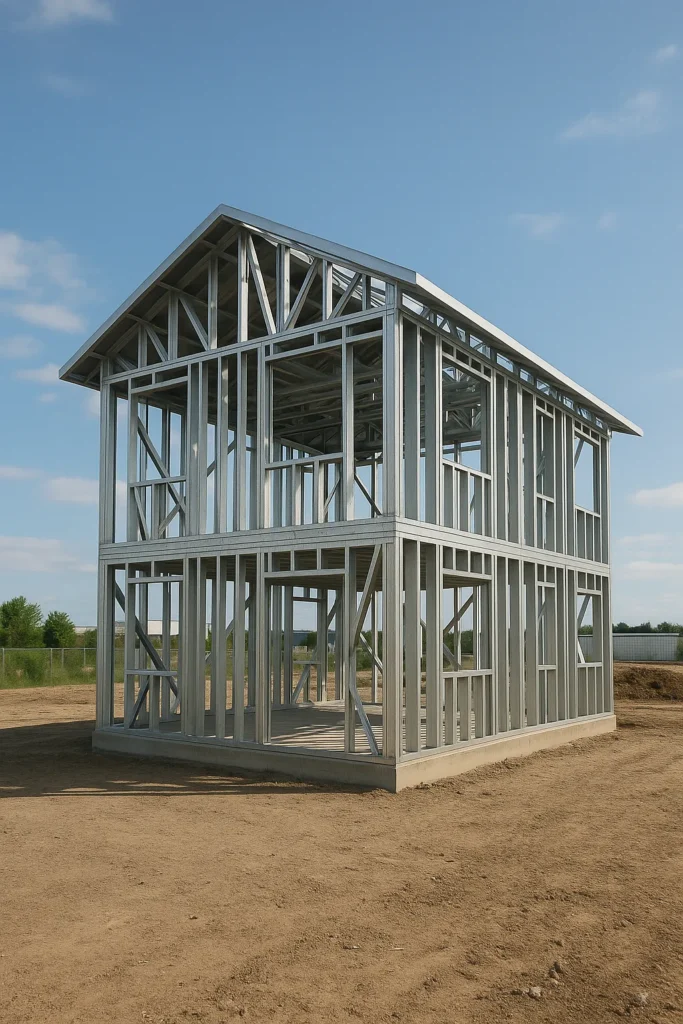
What Are Light Steel Frame Systems
Light steel framing uses thin gauge, galvanised steel profiles shaped by cold forming to create studs, tracks, joists and trusses. Elements are assembled into wall, floor and roof panels in a controlled environment, then delivered to site for rapid installation. Depending on the project, systems may be panelised or volumetric.
- Members: studs, tracks, noggings and channels sized for loads and spans.
- Panels: pre-assembled walls and floors with sheathing, membranes and openings cut to size.
- Connections: screws and fasteners with engineered patterns; bracing for racking resistance.
- Envelopes: insulated build-ups tailored to climate, fire and acoustic targets.
Key Benefits
- Speed: off-site production and dry assembly shorten programmes.
- Precision: CNC and jigs deliver tight tolerances for clean fit-ups.
- Lightweight: reduced foundation loads and easier logistics.
- Design freedom: works with diverse façades and interior layouts.
- Quality control: factory environments support repeatable outcomes.
- Low waste: optimised cutting plans and recyclable steel.
Where LSF Works Best
- Housing: single family homes, townhouses and mid-rise apartments.
- Education: classrooms and campus expansions delivered quickly.
- Healthcare: clinics and diagnostic suites with clean, dry construction.
- Commercial: offices and retail shells ready for fast fit-out.
- Hospitality: modular hotel rooms or cabins with repeatable modules.
Technical Considerations
- Corrosion protection: galvanised coatings and drainage detailing at vulnerable points.
- Fire strategy: tested wall and floor assemblies, cavity barriers and fire-stopping.
- Acoustics: resilient channels, insulation and sealed junctions for privacy.
- Thermal bridging: continuous insulation layers and thermal breaks at studs.
- Airtightness and moisture: membranes, tapes and ventilated rainscreens where needed.
- Fixings and tolerances: engineered screw patterns and site QA checks.
Cost and Budget Drivers
- Steel prices: commodity movements influence raw material costs.
- Module size and complexity: long spans, special geometries and custom openings add time and steel.
- Envelope performance: higher insulation, fire or acoustic ratings increase specification cost.
- Logistics: transport distance, crane access and site constraints affect installation budgets.
- Compliance and documentation: design calculations, inspections and approvals vary by jurisdiction.
Scope clarity: confirm whether offers include frame only, frame plus sheathing, or turnkey envelope and interior fit-out.
Sustainability and Energy
- Material efficiency: optimised profiles reduce tonnage without compromising strength.
- Operational performance: fabric-first envelopes and airtight detailing lower energy use.
- Renewables ready: roofs suited to solar PV and efficient heat pump systems.
- End-of-life: steel is recyclable; panelised construction supports disassembly.
From Design to Assembly
- Brief and targets: define loads, spans, storeys, fire and acoustic benchmarks.
- Digital coordination: model panels, services and openings; finalise junction details.
- Factory production: roll-forming, cutting, punching and panel assembly with QA checks.
- Site preparation: foundations, anchors, tolerances and delivery sequencing.
- Installation and enclosure: panel erection, sheathing, membranes and façade works.
- Commissioning and handover: testing, documentation and user guidance.
FAQ
Are light steel frame systems suitable for multi storey buildings
Yes within engineered limits. LSF is widely used for low to mid-rise structures and as infill for taller frames.
Can LSF support heavy façades
With proper design and fixings. Many projects pair LSF with brick slips, metal cladding or ventilated façades.
How does weather affect installation
Dry construction tolerates typical site conditions well, though wind and lifting safety still govern crane operations.
Is rust a concern
Galvanised coatings and correct detailing mitigate corrosion. Periodic inspections remain good practice.
What about changes after occupancy
Non-loadbearing partitions can be adapted; structural changes require engineering checks and approvals.
Conclusion
Light steel frame systems combine factory precision with rapid assembly, enabling high-quality buildings delivered on tighter programmes. With careful attention to fire, acoustics, thermal bridging and corrosion protection, LSF provides a robust path to modern modular construction that is efficient, adaptable and ready for future expansion.


