




















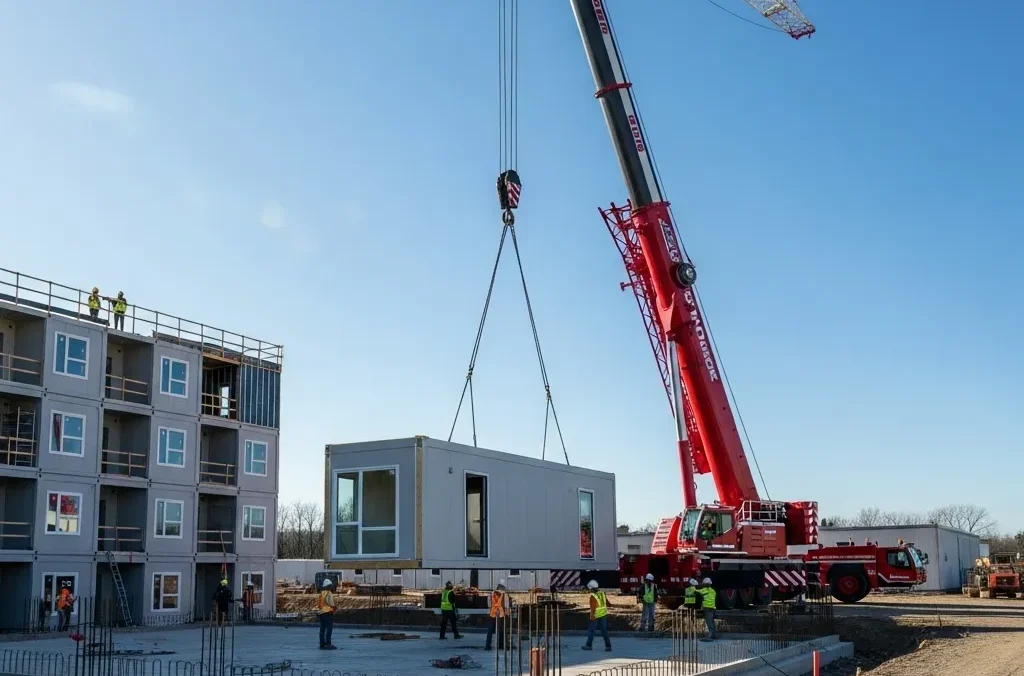
Cut Your Build Schedule in Half: Leveraging the Modular Construction Timeline
In the world of construction, time is money. Delays from weather, subcontractor scheduling conflicts, and supply chain issues can derail projects, inflate budgets, and frustrate stakeholders. For decades, these risks have been accepted as the cost of doing business. But what if there was a way to fundamentally shorten your project schedule?
There is. The solution lies in understanding and embracing the modern modular construction timeline. By shifting a significant portion of the building process into a controlled factory environment, you can gain unprecedented control over your project’s schedule. Adopting a modular construction timeline is no longer just an alternative; it’s a strategic advantage.
The Core Advantage: Parallel Processes
The magic behind the compressed modular construction timeline is the ability to perform major tasks simultaneously. In a traditional build, everything is linear: you can’t start framing until the foundation is cured.
With modular, the process is parallel:
- On-Site: While crews are clearing the land, grading the site, and pouring the foundation…
- Off-Site: Your building’s modules are being simultaneously constructed in our factory.
This parallel workflow eliminates weeks, or even months, of sequential dependencies, drastically shortening the overall modular construction timeline.
Eliminating Weather Delays
One of the biggest variables in traditional construction is the weather. A week of rain or a sudden snowstorm can bring all on-site work to a halt, adding unpredictable delays. This uncertainty is a major flaw in traditional project planning.
The factory-based nature of a modular construction timeline removes weather from the equation. Roughly 80-90% of the construction activity happens indoors, protected from the elements. This ensures that progress continues on schedule, day after day, making the modular construction timeline exceptionally reliable.
Streamlined Labor and Materials
A factory setting is a model of efficiency. All necessary tools, materials, and skilled labor are in one central location. This eliminates the daily travel time for multiple crews and reduces the risk of material theft or damage on an open job site. This streamlined approach is a hallmark of an efficient modular construction timeline, reducing wasted time and improving quality control. For any project manager, a predictable modular construction timeline is a massive asset.
Faster Permitting and Inspections
Because modular buildings are engineered to precise standards and often use pre-approved plans, the initial permitting process can be significantly faster. Furthermore, many inspections (electrical, plumbing, structural) are conducted in the factory at each stage of the build. This minimizes the number of on-site inspections required, further compressing the modular construction timeline. This streamlined regulatory process is a frequently overlooked benefit that accelerates the entire modular construction timeline.
Conclusion: A Smarter, Faster Path Forward
The evidence is clear. The modular construction timeline is not just faster—it’s smarter, more predictable, and more efficient. By leveraging parallel processes, eliminating weather delays, and streamlining labor, you can deliver high-quality projects in as little as half the time of traditional methods.
For any business serious about optimizing project delivery and maximizing return


