




















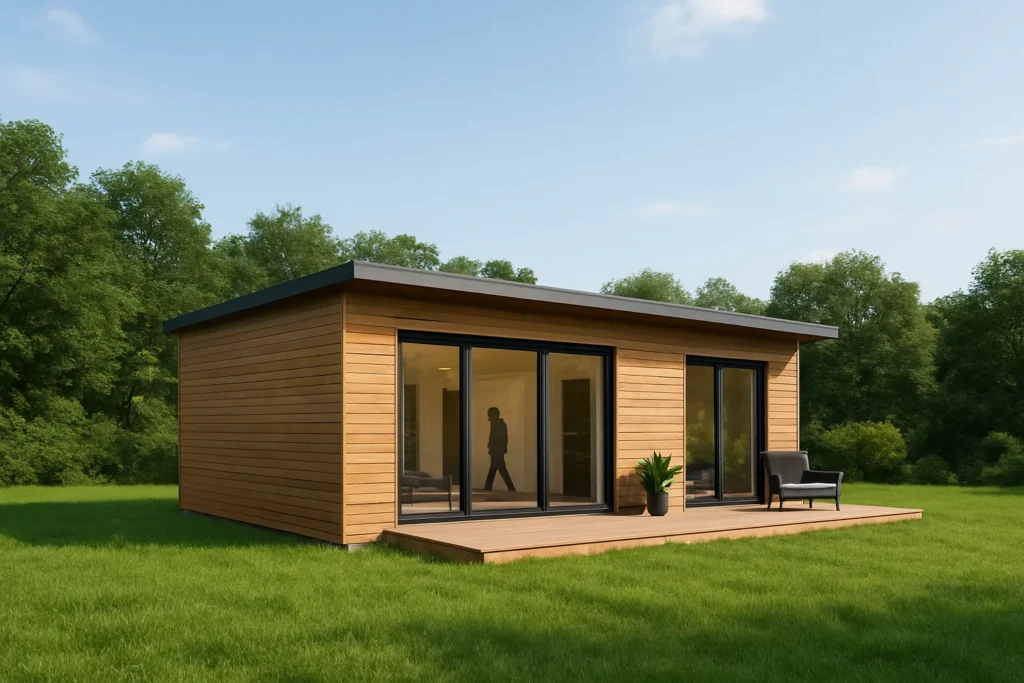
Unlike conventional construction, which requires intensive on-site work, prefabricated buildings are manufactured in controlled factory environments and assembled on-site. This approach not only improves efficiency but also supports sustainable practices on multiple levels.
Reduced Construction Waste
Traditional construction projects often generate significant amounts of waste — from excess materials to damaged products during transport. Prefabricated buildings, however, are built with precisely measured components manufactured in a factory setting. According to a 2023 report from the World Green Building Council, modular and prefabricated construction can reduce construction waste by up to 50% compared to conventional methods. Less waste means fewer materials end up in landfills, directly contributing to sustainability goals.
Energy Efficiency in Design and Manufacturing
Energy use is one of the main factors affecting a building’s environmental footprint. Prefabricated buildings are often designed with energy-efficient materials and insulation systems, ensuring reduced heating and cooling demands. Many factories producing prefabricated components also rely on modern manufacturing systems that optimize energy use.
For example, modular wall panels are often pre-insulated, leading to superior thermal performance. This reduces long-term energy consumption in residential, commercial, and industrial prefabricated structures.
Lower Carbon Emissions
Construction is responsible for nearly 40% of global CO₂ emissions (United Nations, 2022). Prefabrication significantly lowers this figure by shortening construction times and reducing the number of vehicles, machinery, and on-site operations. Transporting pre-built components requires fewer trips, and less time on-site means lower fuel consumption from heavy equipment.
Furthermore, prefabricated buildings can integrate renewable energy systems — such as solar panels or smart ventilation — more easily than traditional builds, further reducing carbon footprints.
Sustainable Materials and Reusability
Another key advantage is the ability to incorporate eco-certified and recyclable materials. Many prefabricated buildings use steel, timber, and composite materials designed for durability and reusability. In addition, when a modular structure is no longer needed, entire sections can be disassembled, relocated, or repurposed for other projects. This circular use of resources supports the principles of a sustainable economy.
Cost-Effective Sustainability
Sustainability is often perceived as expensive, but prefabricated buildings prove otherwise. Their cost-efficiency stems from reduced labor, shorter construction times, and minimized material waste. These savings make eco-friendly construction more accessible to businesses, governments, and homeowners.
In fact, studies from the Modular Building Institute (2024) highlight that prefabricated projects can be completed up to 60% faster than conventional construction, translating into significant savings in both money and energy.
Social and Community Benefits
Sustainability goes beyond materials and emissions. Prefabricated buildings also offer flexibility for rapid deployment in emergency housing, disaster relief, or temporary healthcare centers. This adaptability ensures that communities in need can access safe, durable, and eco-friendly spaces faster than through conventional methods.
By providing both short-term and long-term solutions, prefabricated buildings help create resilient societies prepared to face environmental and social challenges.
Conclusion
Prefabricated buildings stand as a practical, affordable, and environmentally responsible solution to today’s housing and infrastructure needs. From reducing waste and carbon emissions to enhancing energy efficiency and reusability, they embody the principles of sustainable living.
As the demand for eco-friendly construction grows, prefabricated solutions will play a leading role in shaping a greener and more resilient future.


