




















simple controls, clear responsibilities, and quick verification you can apply on any project, large or small.
Why Sites Face Higher Fire Risk
- Hot work and sparks: Welding, cutting, grinding, and bitumen boilers create high-energy ignition sources.
- Temporary electrics: Overloaded boards, damaged leads, damp conditions, and improvised connections.
- Combustibles everywhere: Timber, packaging, insulation, solvents, and gas cylinders build up quickly.
- Changing layouts: New partitions or scaffolds can block escape routes and hide extinguishers.
Core Controls That Work
1) Hot Work Permits and Fire Watch
Use a permit system that confirms shielding, damp-down, and a safe clearance radius. Keep a suitable extinguisher within
arm’s reach and assign a trained fire watch during work plus a cool-down period. Prefer cold-cutting or mechanical
fixings when feasible.
2) Temporary Electrics Done Right
Only qualified electricians should install and modify temporary power. Protect cables from water and pinch points; keep
reels fully unwound to prevent overheating. Use residual-current devices (RCDs) and test them regularly.
3) Housekeeping and Waste Discipline
Clear packaging and cut-offs daily; use metal bins with lids for oily rags and flammables. Separate waste streams and
schedule frequent skips so piles never grow. Keep corridors, stairs, and exits unobstructed at all times.
4) Safe Storage of Fuels and Cylinders
Store LPG, diesel, thinners, and adhesives in ventilated, locked cages away from heat and traffic. Limit “working
quantities” on floors and return excess to central storage at shift end. Chain or rack cylinders upright; cap and
segregate full vs. empty.
5) Smoking, Cooking, and Break Areas
Designate smoking points outdoors with metal sand buckets; ban site-wide otherwise. Keep microwaves, kettles, and
heaters in supervised welfare areas on non-combustible bases.
6) Detection, Alarms, and First-Attack Gear
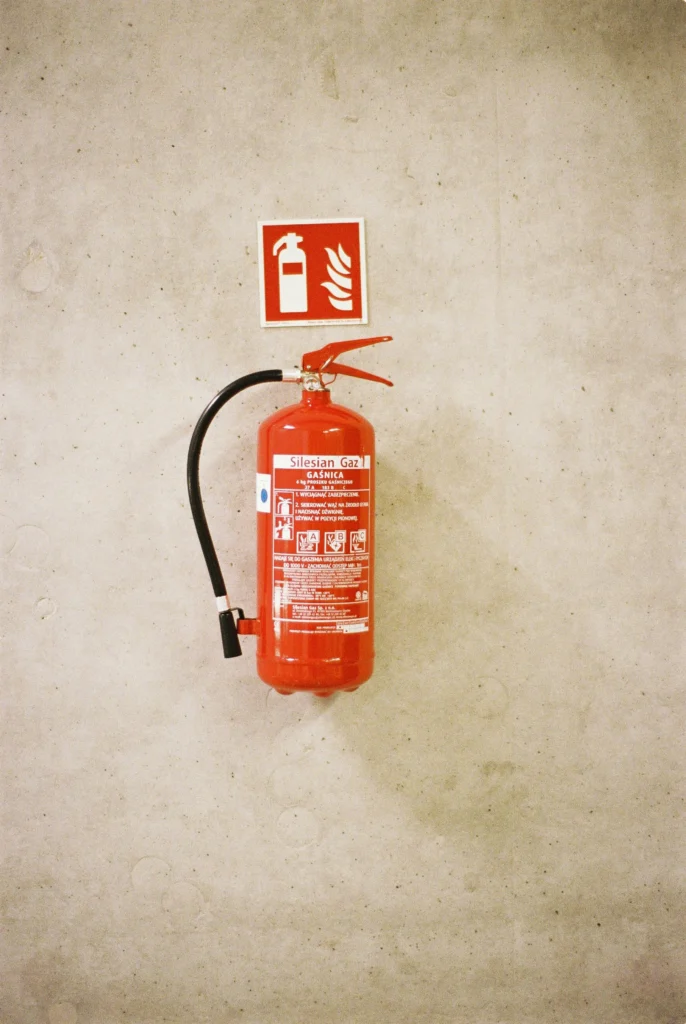
Fit temporary site alarms (manual call points plus horns) as the build evolves. Place the right extinguishers
(water/foam/CO₂) at clear intervals and train staff to use them. Maintain hydrant access and never block fire-service routes.
The Daily 5-Minute Fire Safety Checklist
- Hot work today? Permit issued, area shielded, fire watch assigned.
- Power leads intact, RCDs tested, no daisy-chains or coiled reels under load.
- Waste cleared from stairs, corridors, and hot-work zones.
- Flammables locked; floor quantities minimized; cylinders upright and secure.
- Exits and alarms visible; call points reachable; extinguishers present and tagged.
Make Fire Safety Everyone’s Job
Brief every new starter the moment they arrive. Keep toolbox talks short and site-specific—today’s hot work, today’s
storage moves, today’s blocked route to fix. Reward teams that keep access clear and report hazards; culture beats posters.
Emergency Readiness That Actually Works
Post simple site plans at entrances: “You Are Here,” assembly point, extinguisher locations. Display emergency numbers,
the site address or grid reference, and nearest hospital. Drill evacuations after major layout changes and record
learnings for quick fixes.
Build It Into Procurement and Design
Bake prevention into early decisions. Specify non-combustible hoardings and Class A materials where possible. Require
suppliers to provide safety data sheets and storage limits. Plan just-in-time deliveries to reduce on-site stock.
Sequence works so standpipes or sprinklers come online early, and use temporary compartmentation and fire-resistant
doors to slow spread while the building is incomplete.
Close-Down Routine (End of Day)
Do one final sweep: tidy, lock fuels, isolate temporary power, check alarms, and verify that exits and access roads
remain clear. Photograph the close-down for the daily log—proof the controls were in place.
Conclusion:
Construction site fire prevention isn’t complex—it’s consistent. Control hot work, manage
temporary power, store fuel wisely, and verify daily. Those small, repeatable actions keep projects moving and people safe.


