















10 Unknown Advantages of Prefab Homes You Need to Know
When you hear “prefab home,” what comes to mind? For many, it’s an outdated image of cookie-cutter boxes lacking in style and durability. But the reality of modern prefabricated housing couldn’t be more different. Today’s prefab homes are at the forefront of innovation, offering sustainable, high-quality, and beautifully designed living spaces.
While benefits like faster construction and cost savings are well-known, there are many hidden perks that make modular living an incredibly smart choice. Let’s explore the top 10 advantages of prefab homes that you probably haven’t considered.
1. Superior and Consistent Quality Control
In traditional on-site construction, materials and workmanship are exposed to weather, varying skill levels, and site challenges. Prefab homes are built in a climate-controlled factory environment. This factory setting allows for a level of precision and quality control that is nearly impossible to replicate outdoors. Every component is built to exact specifications, inspected at multiple stages, and protected from elements like rain and humidity, resulting in a stronger, more reliable final product.
2. A Healthier Living Environment
One of the most overlooked advantages of prefab homes is improved indoor air quality. Because the structural components are built in a dry, controlled factory, the risk of moisture and mold developing within the walls during construction is virtually eliminated. Traditional builds are often exposed to rain and snow, trapping moisture that can lead to long-term air quality issues. A prefab home starts, and stays, dry and clean.
3. Surprising Structural Durability
A common misconception is that prefab homes are less durable. The opposite is true. Each module of a prefabricated house must be built to withstand the stresses of being transported by truck to its final location. This requires them to be incredibly rigid and structurally robust—often more so than a traditional site-built home. They are engineered to handle vibrations and movement, making them exceptionally resilient to extreme weather and even seismic activity.
4. Drastically Reduced Neighborhood Disruption
Think about the last time a house was built in your neighborhood: months of noise, traffic from heavy machinery, dust, and a constant stream of workers. Building a prefab home is a much quieter and cleaner process. The main construction happens off-site. The on-site work is primarily foundation preparation and assembly, which takes a fraction of the time. This means less stress for you and your new neighbors.
5. Predictable Timelines and Budgets
The phrase “over budget and behind schedule” is a cliché in traditional construction for a reason. Weather delays, subcontractor issues, and material sourcing problems can derail a project for months. With prefab construction, most variables are controlled. The factory schedule is not affected by weather, and materials are purchased in bulk. This leads to a highly predictable timeline and a fixed cost, giving you peace of mind.
6. Exceptional Energy Efficiency
Modern prefab homes are built with sustainability in mind. The precision manufacturing process allows for tighter seams and joints, resulting in a more airtight building envelope. This means less air leakage, which is a major source of energy loss in traditional homes. Combined with high-performance insulation and energy-efficient windows, prefab homes often exceed the energy standards of their site-built counterparts, leading to significantly lower utility bills.
7. Unmatched Design Flexibility
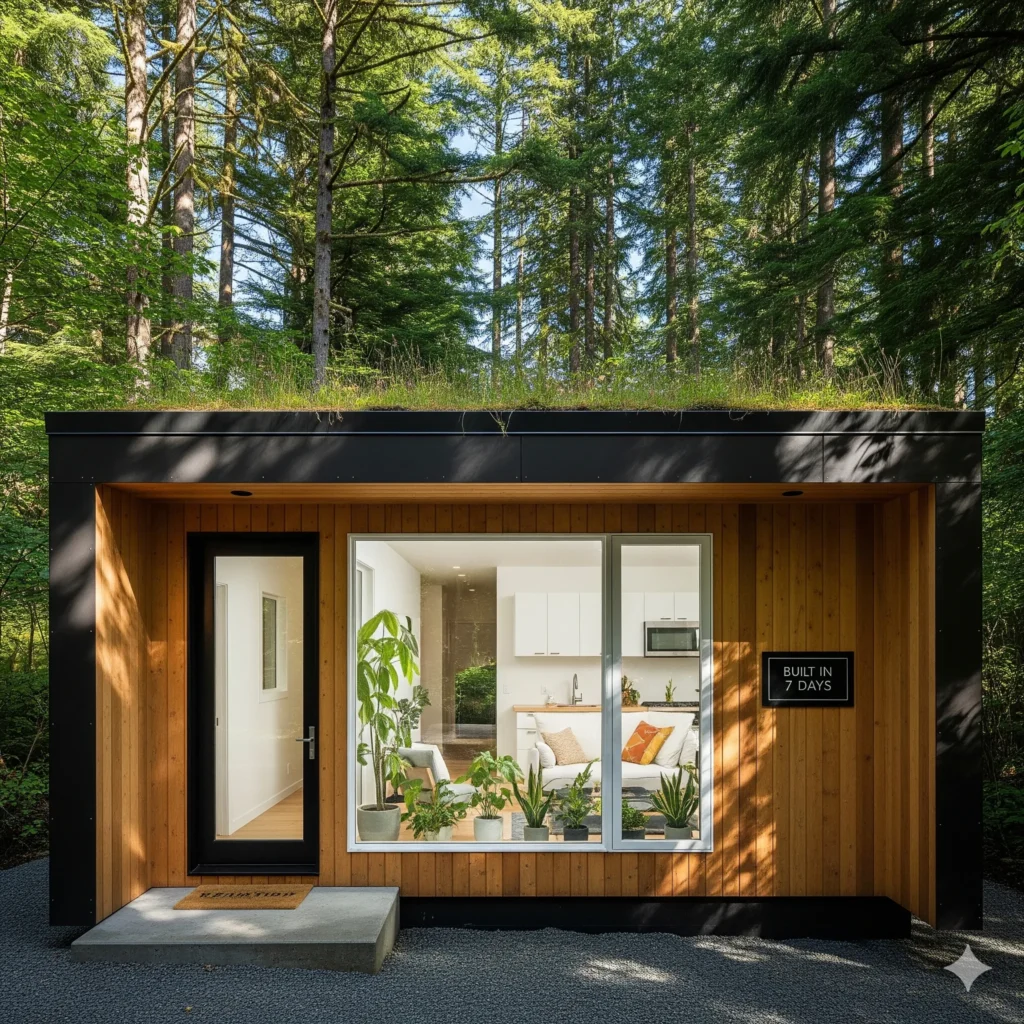
Forget the “one-size-fits-all” myth. The advantages of prefab homes today include incredible design freedom. Whether you dream of a minimalist modern cabin, a sprawling contemporary family home, or a classic colonial, modular construction can make it happen. You can customize floor plans, finishes, fixtures, and exterior cladding to create a home that is uniquely yours.
8. A Truly Sustainable Building Process
Sustainability goes beyond just energy efficiency. The factory building process is inherently less wasteful. Materials are measured and cut with precision, drastically reducing scrap waste compared to on-site construction. Any leftover materials are often recycled or repurposed for other projects within the factory. By choosing prefab, you are supporting a greener, more responsible construction method.
9. Easier to Build in Remote Locations
Have you ever dreamed of a home with a remote, scenic view? Building on a difficult or remote lot with traditional methods can be a logistical and financial nightmare. Transporting materials and finding skilled labor can be nearly impossible. Prefab homes solve this problem. The modules are built elsewhere and then transported to the site for assembly, making it possible to build your dream home almost anywhere.
10. Stronger Long-Term Investment
As quality and design continue to improve, the perception of prefab homes is shifting. Modern, well-built prefabricated homes are now seen as a valuable asset. Their durability, energy efficiency, and high-quality construction mean they hold their value well over time. In many markets, a beautiful and sustainable prefab home is a highly desirable property, making it a smart long-term investment.
Conclusion: A Smarter Way to Live
The hidden advantages of prefab homes paint a clear picture: this is the future of housing. From healthier air and superior durability to environmental responsibility and design freedom, modular construction offers a smarter, more efficient, and higher-quality way to build a home.
If you’re ready to embrace a modern living solution that delivers on its promises, it’s time to look beyond the outdated myths and explore the incredible potential of prefabricated homes.
Ready to learn more about your options?


